



Table of Contents
Imagine applying for a job and being asked, “Have you ever been convicted of a crime?” right now, you’d have to say yes. But what if you could honestly say no?
In Canada, you have the legal right to apply for a pardon—officially called a record suspension— that can seal your criminal conviction away from public view. Once granted, your criminal record is hidden from employers, landlords, volunteer organizations, and most government agencies.
Over 100,000 Canadians successfully obtain pardons every year. The process is legitimate, legal, and life-changing. This comprehensive guide explains everything you need to know about getting a pardon in Canada.
WHAT EXACTLY IS A PARDON? UNDERSTANDING RECORD SUSPENSION
The Legal Definition
A pardon (also called a record suspension since the term was changed in 2012) is a legal process administered by the Parole Board of Canada that removes a criminal conviction from public criminal records.
- Your criminal conviction is sealed from public view
- Criminal record checks show no record of the conviction
- Employers conducting background checks find nothing
- You can legally say you have no criminal record
- The conviction remains in confidential government files for security purposes only
The Government's Goal: Rehabilitation
Canada’s pardon system is based on a philosophy of rehabilitation. The government recognizes that:
- People make mistakes
- People can change and reform
- A lifetime of punishment is unjust
- Society benefits when rehabilitated people can participate fully
- A pardon rewards those who have genuinely reformed
This is why the pardon system exists—to give people a second chance once they’ve demonstrated rehabilitation.
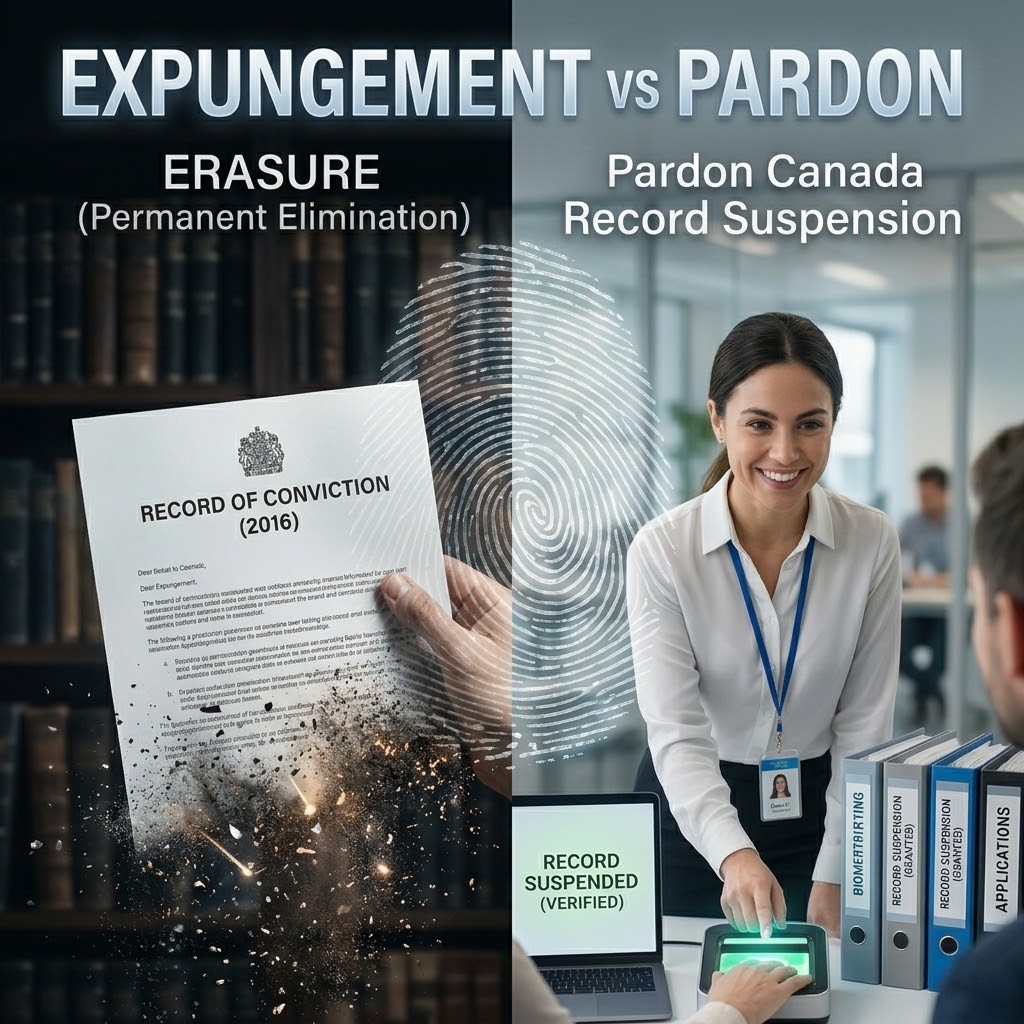
Critical Misconception: Pardon vs. Expungement
Canadians often hear about expungement (common in the US) and assume it’s the same as a pardon. It’s not.
Expungement (US):
- Destroys all record of conviction
- Conviction essentially erased from existence
- Can legally say it never happened
- Very rare in US
Pardon (Canada):
- Seals conviction from public view
- Conviction still exists in confidential files
- Can say you have no record for most purposes
- Available to qualified Canadians
Canada’s pardon system is actually more protective of public safety—the government keeps records for law enforcement purposes while hiding records from public access.
WHO QUALIFIES FOR A PARDON? ELIGIBILITY RULES EXPLAINED
The pardon eligibility system is based on conviction type and how long ago the offense occurred.
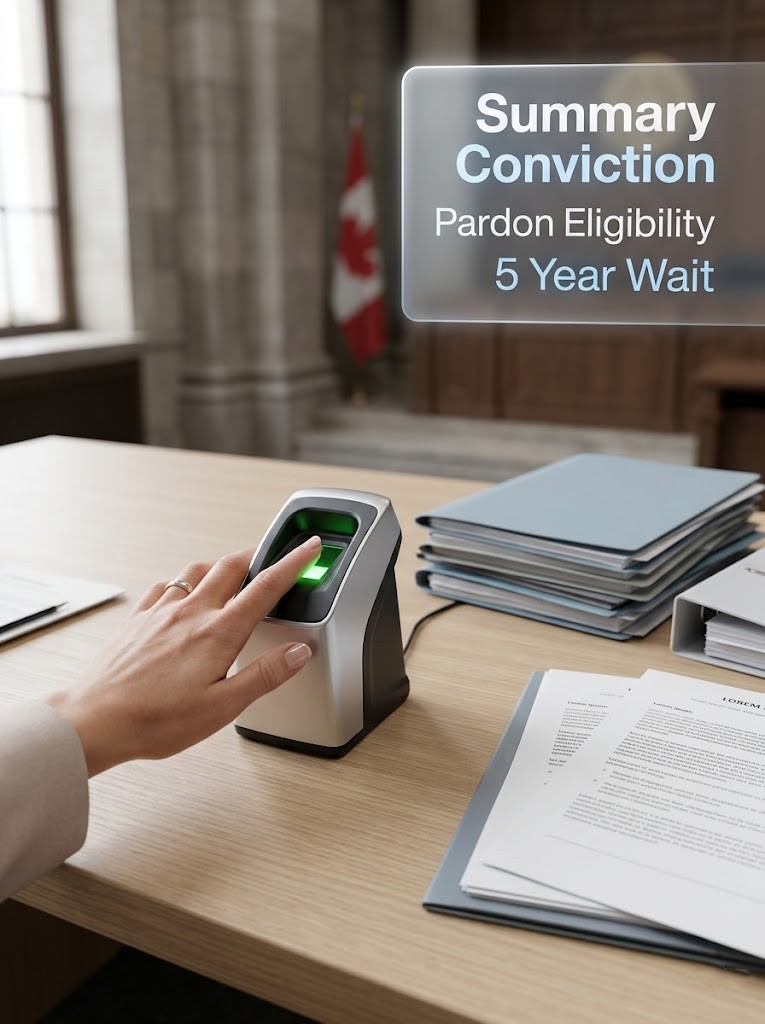
Summary Conviction (Less Serious)
What it is:
- Lesser offense prosecuted in provincial court
- Tried by provincial judge (no jury)
- Maximum sentence: 2 years less a day imprisonment
Examples of summary convictions:
- Theft under $5,000
- Simple assault
- Mischief/vandalism
- Fraud under $5,000
- Driving without license
- Possession of cannabis (small amount)
- Impaired driving (first offense)
- Breach of probation
Pardon eligibility: 5 years after sentence completion
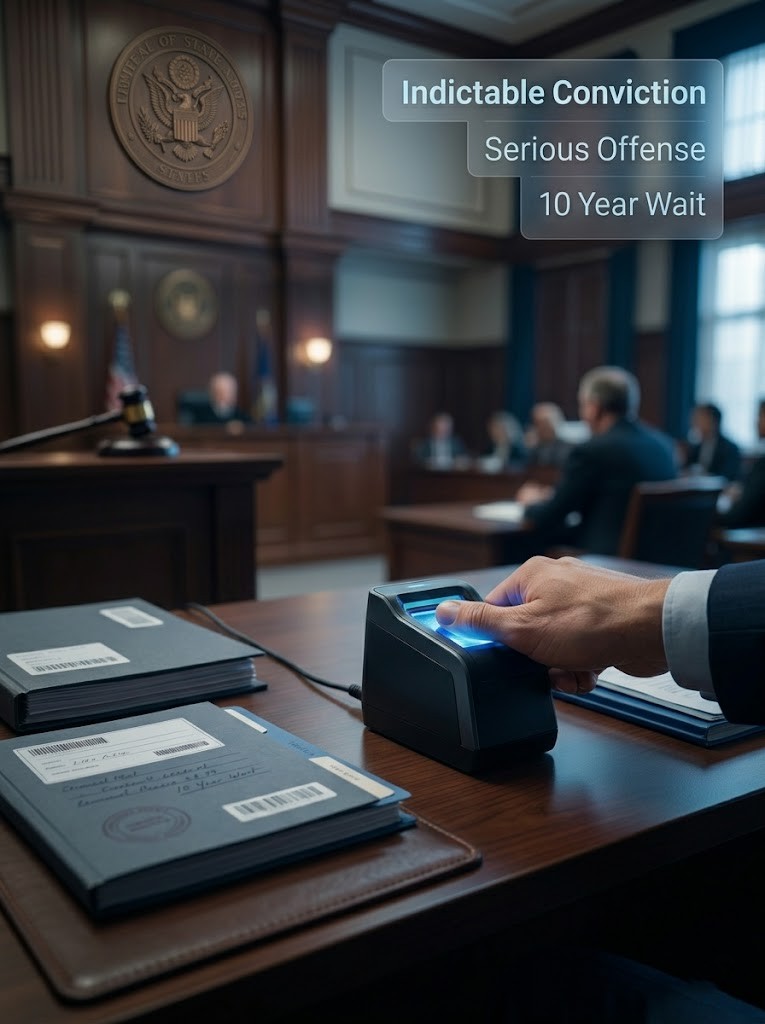
Indictable Conviction (More Serious)
What it is:
- More serious offense
- Can be tried in superior court
- May include jury trial
- Serious criminal conduct
Examples ofindictable convictions:
- Theft over $5,000
- Break and enter
- Assault causing bodily harm
- Sexual assault
- Fraud over $5,000
- Drug trafficking
- Robbery
- Aggravated assault
Pardon eligibility: 10 years after sentence completion
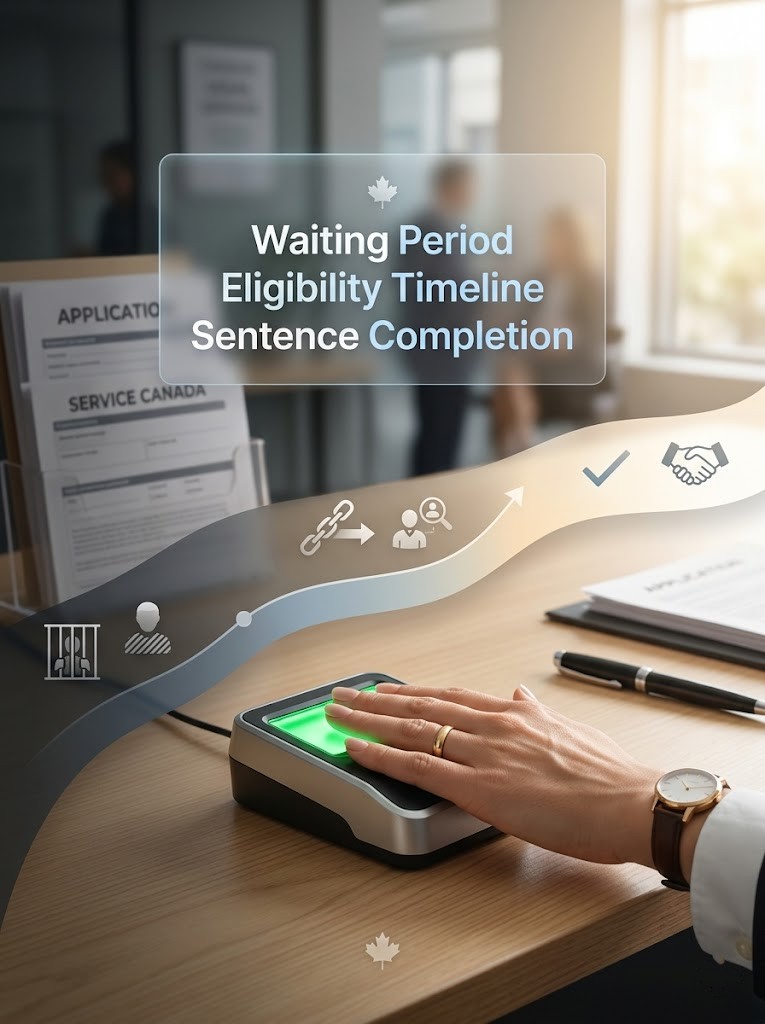
How the Waiting Period Works
Your eligibility date is calculated from the date your sentence is completely finished.
This includes:
- prison time
- probation
- parole
- fines
Example timeline:
Sarah is convicted of theft under $5,000 (summary conviction) in January 2020. She receives a 1-year jail sentence and 2 years probation.
- Prison time completed: January 2021
- Probation completed: January 2023
- Sentence completely finished: January 2023
Eligibility date for pardon: January 2028 (5 years after January 2023)
WHICH CONVICTIONS CAN YOU NEVER GETA PARDON FOR?
Offenses With Lifetime Pardon Ineligibility
- Murder (first degree, second degree, or culpable homicide)
- Manslaughter
- Attempted murder
- Aggravated sexual assault
- Sexual assault causing bodily harm
- Criminal harassment of a minor
- Incest
- Bestiality (sexual abuse of animals)
Why These Are Permanently Ineligible
The government considers these offenses so serious that no amount of time or rehabilitation warrants a pardon. These crimes:
- Involve violence or sexual violence
- Harm vulnerable people (children, minors)
- Indicate deep character issues
- Pose ongoing public safety risk
Convictions With Extended Eligibility (Not Lifetime Ineligible)
Some serious convictions have extended waiting periods but aren’t permanently ineligible:
- Sentences over 2 years: 14-year waiting period (instead of 10)
- Multiple violent convictions: 14-year waiting period
- Sexual offenses (non-aggravated): 10 or 14-year periods
THE PARDON APPLICATION PROCESS: STEP BY STEP
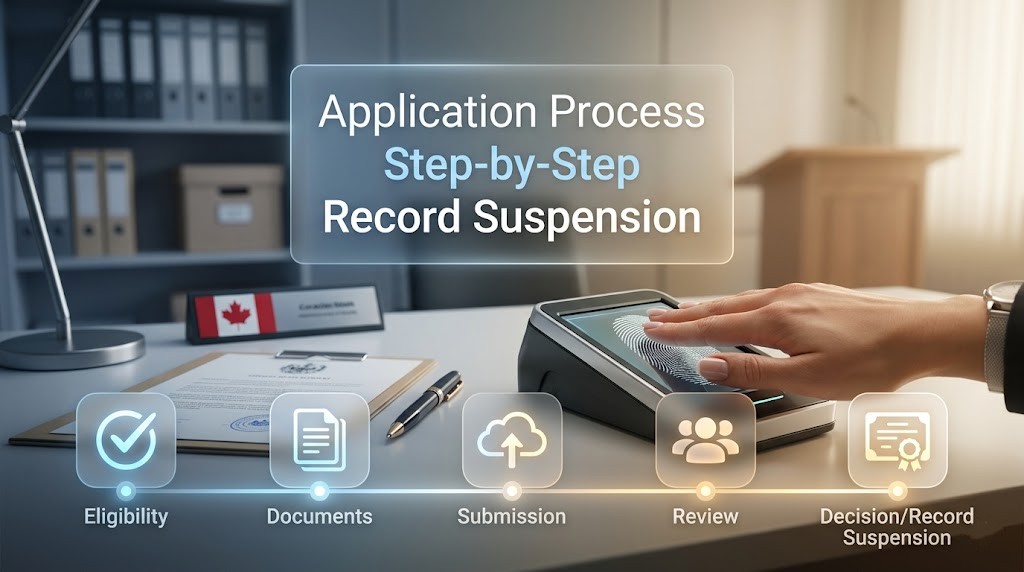
Understanding each phase helps you prepare mentally and logistically.
Phase 1: Eligibility Determination (Week 1)
First, confirm you’re eligible:
1. Identify conviction type: Summary or indictable?
2. Calculate eligibility date: When is 5 or 10 years from sentence completion?
3. Confirm sentence completion: Are ALL parts (jail, probation, fines) finished?
4. Check for reoffenses: Have you been convicted of anything since?
5. Check conviction type: Isn’t it one of the permanently ineligible crimes?
If you don’t meet all criteria, you’re not yet eligible. The waiting period must be complete.
Phase 2: Document Collection (Weeks 2-8)
Criminal Record Documents
- Court documents from original conviction (sentencing documents, judgments)
- Criminal record abstract from RCMP (official record)
- Police reports from arrest/conviction
- Proof of sentence completion (discharge papers, probation completion letters)
Personal & Background Documents
- Employment history (letters from employers showing you’ve maintained employment)
- Education (certificates, diplomas if you’ve pursued further education)
- Residence history (proof of where you’ve lived)
- Family information (spouse, children, dependents)
- Community involvement (volunteer work, community service)
Character References
These are critical to pardon approval. You need 3-5 letters from people who can attest to:
- Your character reformation
- Your current lifestyle
- Your employment/community involvement
- Why you deserve a second chance
Who should write references:
- Employers (best—shows employment stability)
- Community leaders
- Counselors (if you’ve received counseling)
- Religious leaders
- Family members (less weight than others)
Personal Statement
You’ll write a statement explaining:
- What happened and why
- Your responsibility for the offense
- How you’ve changed since
- Your current life situation
- Why you deserve a second chance
This is critical—a weak personal statement leads to denials. It must be genuine, not manipulative.
Phase 3: Form Completion (Weeks 9-12)
Parole Board of Canada forms are detailed and must be completed accurately:
- Application form: Main pardon application
- Financialform: Documenting your current finances
- Employment form: Detailed work history
- Personal information form: Biographical details
Key points:
- Forms must match exactly (no inconsistencies)
- All dates must be precise
- Handwriting must be legible
Phase 4: Application Submission (Week 13)
You submit your complete package to:
- Parole Board of Canada
- By mail to regional office
- Or through their online portal (varies by region)
You pay the government fee ($657 CAD as of 2024).
What happens:
- Application is logged and assigned case number
- Initial completeness review
- Sent to investigation team
Phase 5:Investigation & Processing (Months 2-10)
They verify:
- Your criminal record (confirms sentence, sentence completion)
- Your employment claims (contact employers)
- Your character references (sometimes contact references)
- Your residence history (verify addresses)
They assess:
- How genuinely you’ve reformed
- Whether you pose any public safety risk
- Whether enough time has passed
- Whether circumstances justify granting pardon
Timeline:
- Standard processing: 8-12 months
- Can extend if they need more information
You may receive requests for additional documentation
If they request more information:
- You respond within specified timeframe
- Provides additional explanations
- May include updated character references
Phase 6: Decision (Month 12+)
Approval
You receive:
- Official pardon certificate
- Record suspension confirmed
- Criminal record sealed
- Can legally say you have no record
Conditional Approval
You receive approval BUT with conditions:
- Additional community service may be required
- Counseling or programming completion
- Other rehabilitation requirements
Once conditions met, pardon is fully effective
Denial
Reasons could include:
- Insufficient rehabilitation shown
- Weak character references
- Incomplete documentation
- Not enough time passed
- Poor personal statement
If denied:
- Can reapply after 1 year (or longer depending on reason)
- Address reasons for denial in next application
- Strengthen rehabilitation evidence in interim year
APPROVAL RATES: UNDERSTANDING YOUR CHANCES
This is the question everyone asks: “What are my chances?”
Factors That Increase Approval Likelihood
- Long time elapsed since conviction (10+ years better than 5-7)
- Stable employment for several years
- No reoffenses since original conviction
- Strong character references from employers/professionals
- Community involvement (volunteer work, community service)
- Education/skill development since conviction
- Family stability (married, children, home ownership)
- Clear genuine remorse in personal statement
- Understanding of original offense (not blaming others)
Factors That Decrease Approval Likelihood
- Minimal time elapsed (just meeting minimum eligibility)
- Employment instability (frequent job changes)
- Reoffenses since original conviction (even minor)
- Weak character references or missing references
- No evidence oflife change
- Poor personal statement (defensive, minimizing)
- Incomplete documentation
- Failure to follow instructions
THE REAL-WORLD IMPACT: HOWA PARDON CHANGES YOUR LIFE

Employment Impact
Before pardon:
“I applied for an excellent job. During the background check, they found my conviction from 12 years ago. They hired someone else. I didn’t even get an interview once they saw my record.”
After pardon:
“I applied for the same type of position. Background check came back clean. I got the job.”
The difference: Same qualifications, same person—but pardon removed the barrier.
Housing Impact
Before pardon:
“Landlords kept rejecting my applications. When I asked why, I learned they were doing criminal record checks and finding my conviction. I was limited to renting from people who didn’t care about records.”
After pardon:
“I applied for a much nicer apartment. The landlord’s background check came back clean. I got approved at standard rates.”
The difference: Your housing options expand dramatically.
Professional Licensing
Before pardon:
“I wanted to become a teacher. Every education program asks about criminal record. I was rejected. Teaching wasn’t an option.”
After pardon:
“I completed my teaching degree and became a teacher. With pardon, I could honestly answer ‘no’ to the criminal record question.”
The difference: Career doors open that were previously closed.
Travel & InternationalImpact
Before pardon:
“Traveling was complicated. Some countries denied entry knowing about my record. Customs screening was always extra intensive.”
After pardon:
“Travel is much simpler. While international travel is still subject to each country’s rules, many countries that would have denied me now have no record of my conviction.”
The difference: Travel freedom increases significantly.
THE PARDON SYSTEM WORKS: REAL STORIES

Story 1: The Second Chance
Marcus was convicted of theft at age 23. He spent 18 months in prison and 3 years on probation. After rehabilitation—getting stable employment, completing counseling, volunteering—he applied for pardon at age 35. His pardon was approved.
He went on to become a manager at a retail company. The pardon gave him the opportunity to compete fairly based on his qualifications, not his criminal past.
The lesson: Time + genuine rehabilitation = second chan
Story 2: The Career Changer
Patricia had a conviction for fraud from her 20s. She’d been working steadily for 15 years, raised two children, volunteered extensively. But she couldn’t pursue her dream of working in nonprofit administration because organizations always rejected her due to her conviction.
After receiving her pardon, she was hired immediately by a non-profit. Her conviction was no longer visible to employers. She was finally able to pursue work she found meaningful.
The lesson: A pardon opens doors that were previously locked.
Story 3: The Housing Stability
David struggled to find housing with his conviction record. He kept getting rejected. After receiving his pardon, he applied for the same quality of apartments and was approved. He moved to a better neighborhood, better school for his son, better environment.
The lesson: Pardon removes systemic barriers to life stability.
CONCLUSION: YOUR PATH TO A SECOND CHANCE
A criminal record creates invisible barriers that affect employment, housing, travel, and peace of mind. A pardon removes those barriers legally and legitimately.
Canada’s pardon system recognizes human capacity for change and rehabilitation. If you’ve served your sentence, stayed crime-free, and genuinely reformed, you deserve the opportunity to move forward without carrying the weight of your past.
The pardon process takes time and effort, but for thousands of Canadians annually, it’s lifechanging.
If you believe you’re eligible, the time to explore your options is now.

FAQ: Your Questions Answered
If I have a pardon, can I still be denied entry to other countries?
Yes. A pardon removes your record from Canadian public databases, but it doesn’t remove it from other countries’ records. Other countries conduct their own background checks. However, many countries are more lenient once sufficient time has passed.
Does a pardon mean my conviction never happened?
Can Ilie about my criminal record once I have a pardon?
What ifI get convicted of another crime after applying for a pardon?
How much does a pardon cost?
The government filing fee is $657 CAD. This is paid directly to Parole Board of Canada.
How long does it take for immigrants and international applicants?
International applicants using paper submissions can face up to 120 business days. Those in Canada using digital fingerprinting through an accredited provider typically receive results in 3 to 10 business days if no record is found. Read: https://loteyfingerprinting.ca/immigration-fingerprinting-services-canada/
How long does a pardon take?
Can I apply for a pardon ifI'm still on probation?
What if my pardon application is denied?
Do I need a lawyer to get a pardon?
Can a pardon ever be revoked?

Navneet Lotey
Navneet Lotey has over 5 years of experience in fingerprinting. He aims to deliver accurate, easy-to-understand fingerprinting solutions for individuals and businesses alike.