

The Confusion That Costs Students Time and Money
“Do I need a police clearance certificate or a criminal record check?”
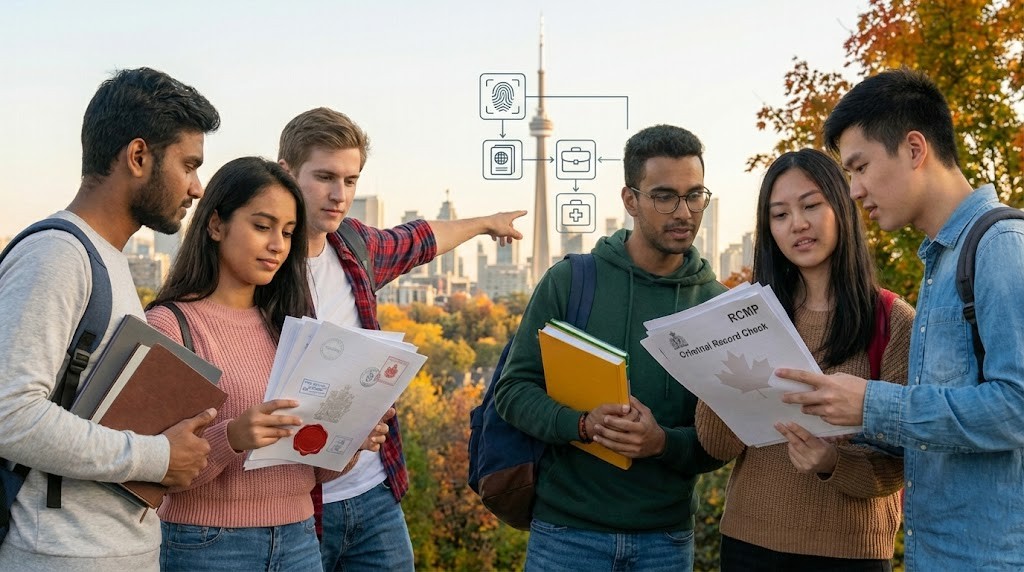
This question causes more confusion among international students than almost any other aspect of studying in Canada. Sarah, an Indian student applying to a Toronto college, spent $200 getting a police clearance certificate from her home country—only to discover she didn’t need it for her study permit. Meanwhile, her friend Priya got a job offer at a Brampton daycare center and was told she needed a “vulnerable sector check” immediately. Neither understood what was actually required.
If you’re an international student in Canada or planning to come here, understanding the difference between these documents can save you time, money, and significant stress.
Here's the truth: Police clearance certificates and criminal record checks are NOT the same thing and they serve different purposes. Let's break down exactly what you need and when.
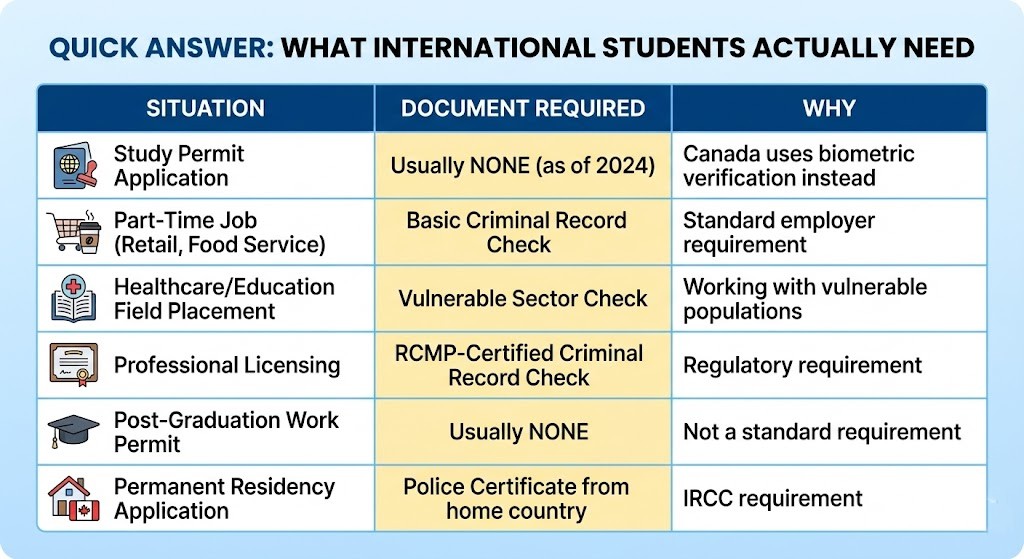
Quick Answer: What International Students Actually Need
| Situation | Document Required | Why |
|---|---|---|
| Study Permit Application | Usually NONE (as of 2024) | Canada uses biometric verification instead |
| Part-Time Job (Retail, Food Service) | Basic Criminal Record Check | Standard employer requirement |
| Healthcare / Education Field Placement | Vulnerable Sector Check | Working with vulnerable populations |
| Professional Licensing | RCMP-Certified Criminal Record Check | Regulatory requirement |
| Post-Graduation Work Permit | Usually NONE | Not a standard requirement |
| Permanent Residency Application | Police Certificate from home country | IRCC requirement |
Source: IRCC Policy Updates, 2024-2025
Understanding the Key Differences
Police Clearance Certificate (PCC)
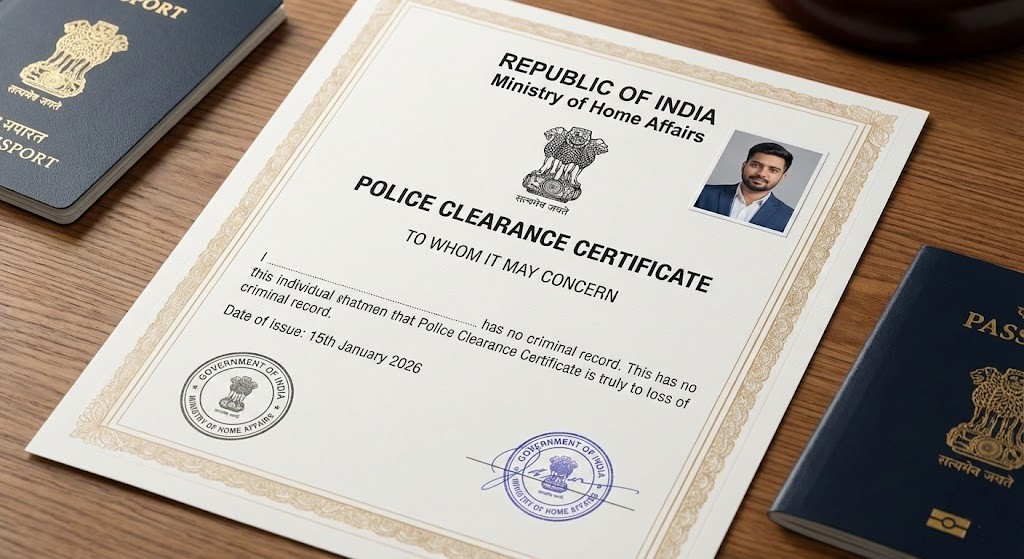
What it is: An official document from your home country’s police or government authorities confirming whether you have a criminal record there.
Also called:
- Good conduct certificate
- Police certificate
- Certificate of no criminal conviction
- Judicial record extract
- Who issues it: Police authorities in your home country
- Purpose: Immigration applications, permanent residency, citizenship
Key fact: Canada’s Immigration Minister Marc Miller stated in May 2024 that police clearance certificates are not required for individuals entering the country as temporary residents, including those on study permits, as they are considered unreliable.
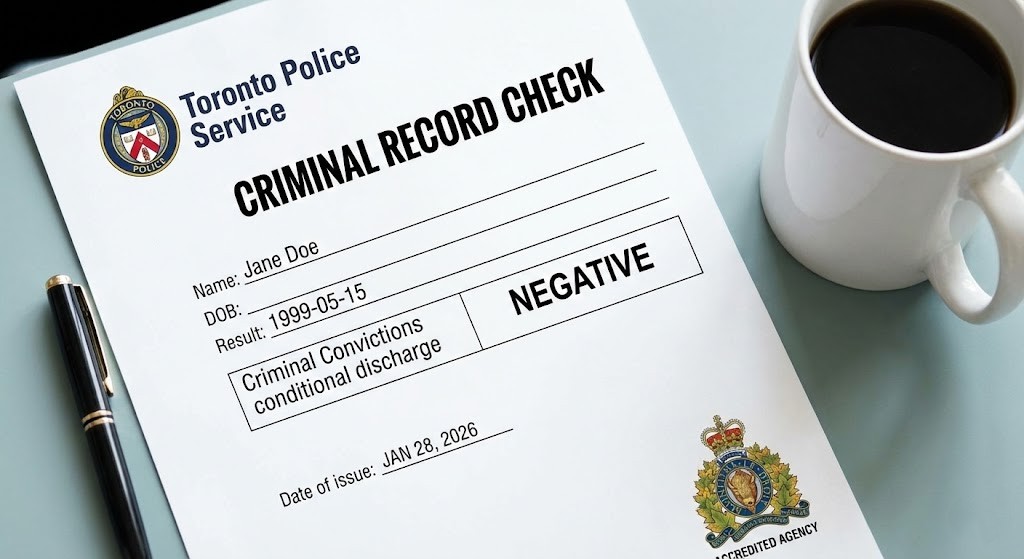
Criminal Record Check (CRC)
What it is: A background check conducted within Canada by Canadian authorities (usually RCMP or local police) that searches Canadian criminal databases.
Types available:
- Basic Criminal Record Check
- Criminal Record and Judicial Matters Check
- Vulnerable Sector Check
- Who issues it: RCMP, local police services, or accredited fingerprinting agencies
- Purpose: Employment, volunteering, professional licensing, practicum placements within Canada
Key fact: This verifies your criminal history in CANADA only, not your home country.
The 2024 Policy Change: What Changed for Study Permits
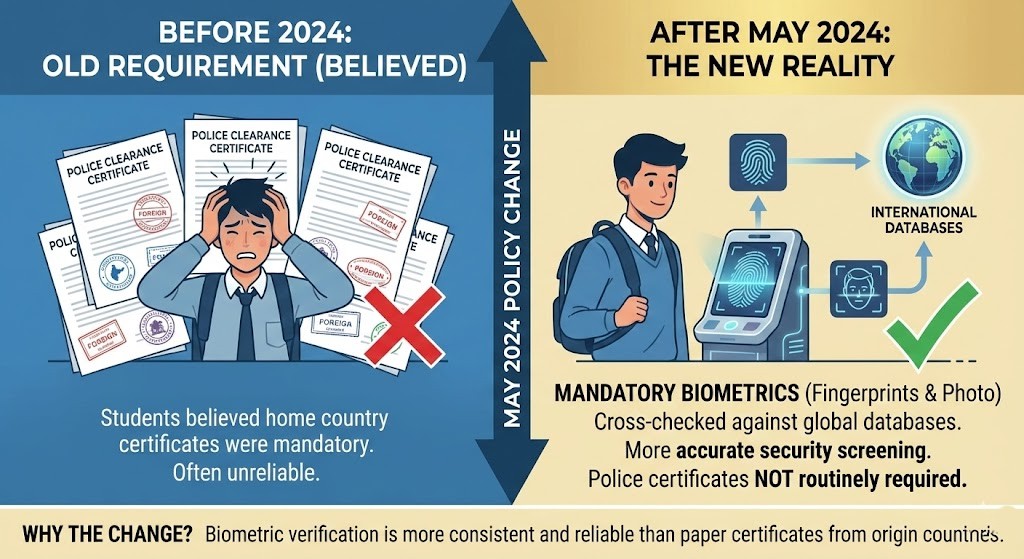
What Used to Be Required
Before 2024, many international students believed they needed police clearance certificates from their home countries to apply for study permits.
What Changed
In May 2024, Immigration Minister Marc Miller clarified that verification is primarily conducted through biometric data, such as fingerprints, which are cross-checked against international law enforcement databases.
The new reality:
- Biometric collection (fingerprints and photo) is mandatory for most study permit applicants
- Canada cross-references your biometrics with international databases
- Police clearance certificates are NOT routinely required for study permits
- An officer may request a police certificate if they decide it’s necessary as part of cascading security screening
Why the Change?
Minister Miller explained that police certificates from countries of origin are often unreliable. Canada’s biometric verification system provides more accurate and consistent security screening.
International Student Numbers: The Current Landscape
Understanding how many students are affected by these requirements helps put things in perspective:
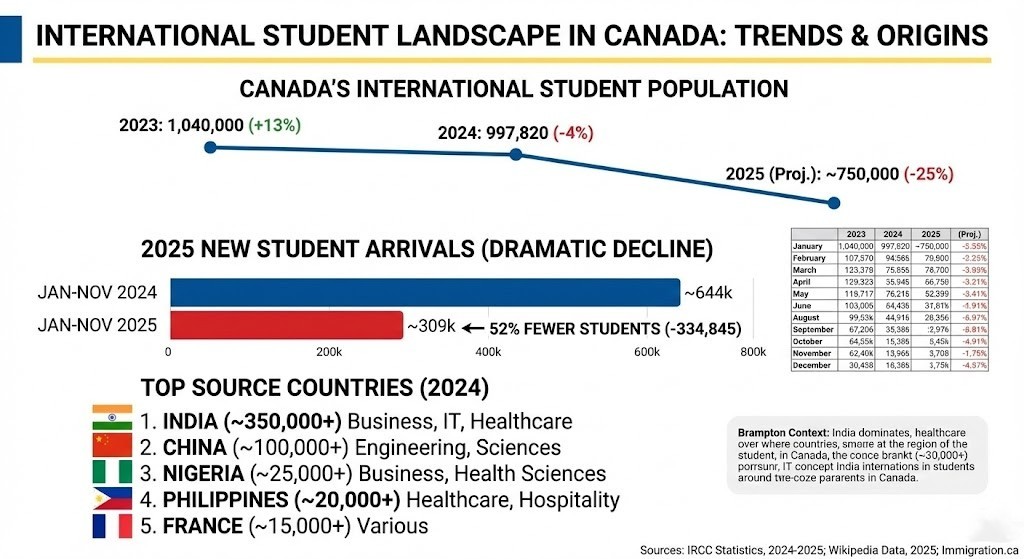
Canada's International Student Population
| Year | Total International Students | Change from Previous Year |
|---|---|---|
| 2023 | 1,040,000 (approx.) | +13% |
| 2024 | 997,820 | -4% |
| 2025 (Projected) | ~750,000 | -25% |
Sources: IRCC Statistics, 2024-2025; Wikipedia Data, 2025
2025 New Student Arrivals (Dramatic Decline)
Monthly Comparison:
| Month | 2024 New Arrivals | 2025 New Arrivals | Decline |
|---|---|---|---|
| January | 23,570 | 8,295 | -65% |
| August | 79,745 | 45,065 | -43% |
| November | 15,830 | 2,485 | -84% |
| December 2023 | 95,320 | N/A | Peak |
Sources: IRCC Statistics, 2024-2025; Wikipedia Data, 2025
Top Source Countries for International Students (2024)
| Rank | Country | Approximate Students | Primary Fields |
|---|---|---|---|
| 1 | India | ~350,000+ | Business, IT, Healthcare |
| 2 | China | ~100,000+ | Engineering, Sciences |
| 3 | Nigeria | ~25,000+ | Business, Health Sciences |
| 4 | Philippines | ~20,000+ | Healthcare, Hospitality |
| 5 | France | ~15,000+ | Various |
Source: IRCC Reports, Immigration.ca, 2024-2025
When International Students ACTUALLY Need Criminal Record Checks
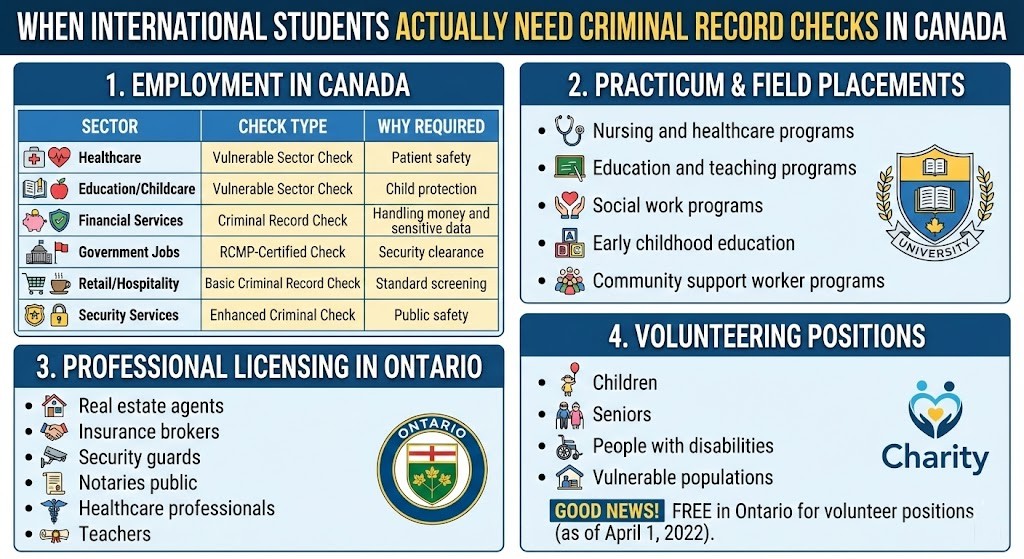
1. Employment in Canada
Monthly Comparison:
| Sector | Check Type | Why Required |
|---|---|---|
| Healthcare | Vulnerable Sector Check | Patient safety |
| Education / Childcare | Vulnerable Sector Check | Child protection |
| Financial Services | Criminal Record Check | Handling money and sensitive data |
| Government Jobs | RCMP-Certified Check | Security clearance |
| Retail / Hospitality | Basic Criminal Record Check | Standard screening |
| Security Services | Enhanced Criminal Check | Public safety |
2. Practicum and Field Placements
According to Coast Mountain College in British Columbia, criminal background checks are required in some programs to ensure that applicants are allowed to participate in practicum components or be in contact with children and vulnerable populations.
- Nursing and healthcare programs
- Education and teaching programs
- Social work programs
- Early childhood education
- Community support worker programs
3. Professional Licensing in Ontario
If you plan to work in regulated professions after graduation, you’ll need criminal record checks for licensing:
- Real estate agents
- Insurance brokers
- Security guards
- Notaries public
- Healthcare professionals
- Teachers
4. Volunteering Positions
Many volunteer organizations require checks, especially those working with:
- Children
- Seniors
- People with disabilities
- Vulnerable populations
Good news: In Ontario, there is no payment required for criminal record checks as of April 1, 2022, if applying for a volunteer position.
The Three Types of Criminal Record Checks in Canada
Type 1: Basic Criminal Record Check
What it shows:
- Adult criminal convictions in Canada
- Outstanding charges
- Warrants
Processing time: 3-5 business days (electronic)
Cost: $40-$75
Who needs it: Most entry-level jobs, general employment
Type 2: Criminal Record and Judicial Matters Check
What it shows:
Everything in Type 1, PLUS:
- Charges before the courts
- Dispositions
- Findings of guilt under federal statutes
Processing time: 5-10 business days
Cost: $50-$85
Who needs it: Government jobs, positions with higher security requirements
Type 3: Vulnerable Sector Check (VSC)
What it shows:
Everything in Type 2, PLUS:
- Pardoned sex offenses (if applicable)
- Non-conviction records related to vulnerable sector concerns
- Findings of not criminally responsible due to mental disorder
Processing time: 8-14 weeks (requires fingerprinting)
Cost: $65-$100
Who needs it: Anyone working with children, seniors, or vulnerable populations
Important: Fingerprints may be required if your gender and date of birth match someone on the pardoned sex offender database.
Common Scenarios: What You Actually Need
Scenario 1: Arriving in Canada for Studies
What you need:
- ✅ Valid study permit
- ✅ Biometrics (already collected during application)
- ❌ NO police clearance certificate (unless specifically requested)
- ❌ NO Canadian criminal record check
Scenario 2: Getting a Part-Time Job
Example: Working at Tim Hortons, Walmart, or a restaurant
What you need:
- ✅ Basic Criminal Record Check
- ✅ Social Insurance Number (SIN)
- ✅ Valid study permit with work authorization
Processing: 3-5 business days
Cost: $40-$60
Scenario 3: Nursing Program Practicum
Example: Second-year nursing student at Sheridan College needs hospital placement
What you need:
- ✅ Vulnerable Sector Check
- ✅ Fingerprinting through RCMP-accredited agency
- ✅ Valid study permit
Processing: 8-12 weeks (plan ahead!)
Cost: $75-$100
Scenario 4: Applying for Permanent Residency After Graduation
Example: International student with Post-Graduation Work Permit (PGWP) applying for RN position
What you need:
- ✅ Vulnerable Sector Check (renewed)
- ✅ College of Nurses registration (requires criminal check)
- ✅ Valid work permit
Note: Criminal record checks expire. Most employers require checks issued within the last 6 months.
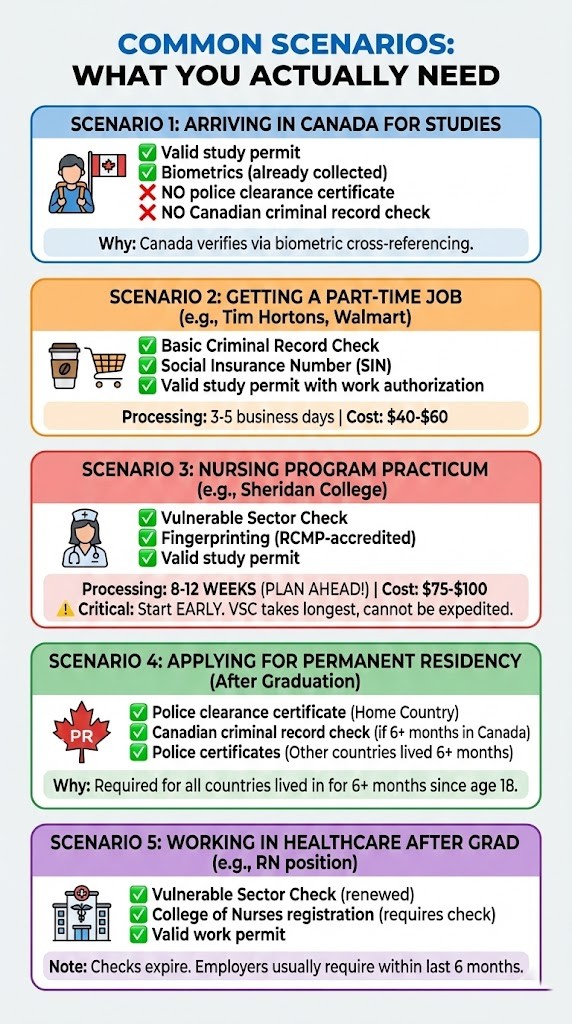
Scenario 5: Working in Healthcare After Graduation
What you need:
- ✅ Police clearance certificate from your home country
- ✅ Canadian criminal record check (if lived in Canada 6+ months)
- ✅ Police certificates from any other country where you lived 6+ months since age 18
Why: You or a family member over the age of 18 will need to obtain a police clearance if you have lived in a country other than Canada for six consecutive months or longer in the past year.
How to Get a Criminal Record Check in Canada
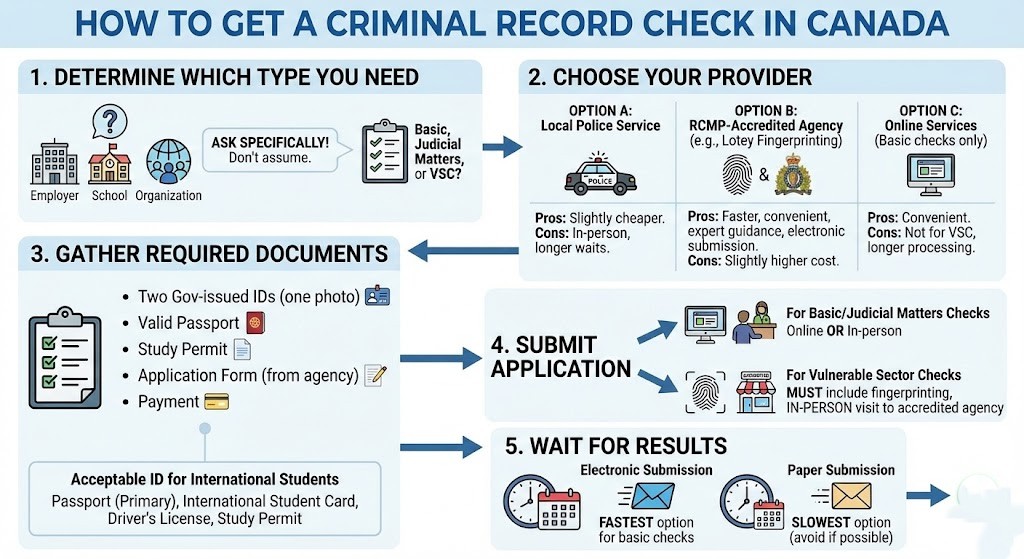
Step 1: Determine Which Type You Need
Ask your employer, school, or organization specifically which type of check they require. Don’t assume!
Step 2: Choose Your Provider
Option A: Local Police Service
- Pros: Often slightly cheaper
- Cons: In-person only, longer wait times
Option B: RCMP-Accredited Private Agency (like Lotey Fingerprinting)
- Pros: Faster, convenient hours, expert guidance, electronic submission
- Cons: Slightly higher cost
Option C: Online Services (for basic checks only)
- Pros: Convenient
- Cons: Not available for VSC, longer processing
Step 3: Gather Required Documents
You’ll need:
- Two pieces of government-issued ID (one with photo)
- Valid passport
- Study permit
- Application form (provided by agency)
- Payment
Acceptable ID for international students:
- Passport (primary ID)
- International student card
- Driver’s license (if you have one)
- Study permit
Step 4: Submit Application
For Basic/Judicial Matters Checks: Can often be done online or in person
For Vulnerable Sector Checks: MUST include fingerprinting, requires in-person visit to accredited agency
Step 5: Wait for Results
Electronic submission: Fastest option for basic checks
Paper submission: Slowest option (avoid if possible)
Processing Times & Planning Ahead
Realistic Timeline Expectations
| Check Type | Best Case | Average | Worst Case |
|---|---|---|---|
| Basic CRC (Electronic) | 3 days | 5 days | 10 days |
| Judicial Matters | 5 days | 7–10 days | 14 days |
| VSC (No Match) | 8 weeks | 10 weeks | 12 weeks |
| VSC (Manual Review) | 10 weeks | 12–14 weeks | 16 weeks |
Source: RCMP Processing Data, 2024-2025
⚠️ Pro Tip: Various Canadian immigration programs require applicants to submit police certificates as supporting documents during the application process. Processing times can vary significantly, so always start early.
Why Processing Times Vary
- Volume: Peak hiring seasons (August-September) cause delays
- Match Requirements: If your info matches someone in the database, manual verification is needed
- Fingerprint Quality: Poor prints get rejected, requiring resubmission
- Submission Method: Electronic = fastest, paper = slowest
Common Mistakes International Students Make
❌ Mistake 1: Getting the Wrong Type of Check
The Error: Student gets a basic criminal record check when employer required vulnerable sector check
The Cost: Wasted money ($50-$75) and 2-3 months of delay
Solution: Always confirm the specific type required before applying
❌ Mistake 2: Using Non-Accredited Providers
The Error: Getting fingerprints done at a non-RCMP-accredited location
The Cost: Results rejected, complete restart required
Solution: Verify RCMP accreditation before booking
❌ Mistake 3: Waiting Until the Last Minute
The Error: Applying for VSC 2 weeks before practicum starts
The Cost: Missing placement opportunity, delayed graduation
Solution: Start 3-4 months early for vulnerable sector checks
❌ Mistake 4: Assuming Home Country Police Certificate Works
The Error: Submitting police clearance from India for Toronto daycare job
The Cost: Application rejected, additional expense
Solution: Understand that Canadian employers need CANADIAN criminal record checks
❌ Mistake 5: Not Checking Validity Period
The Error: Using a 9-month-old criminal record check
The Cost: Employer rejection, need new check
Solution: Most employers require checks issued within 3-6 months
Special Considerations for International Students
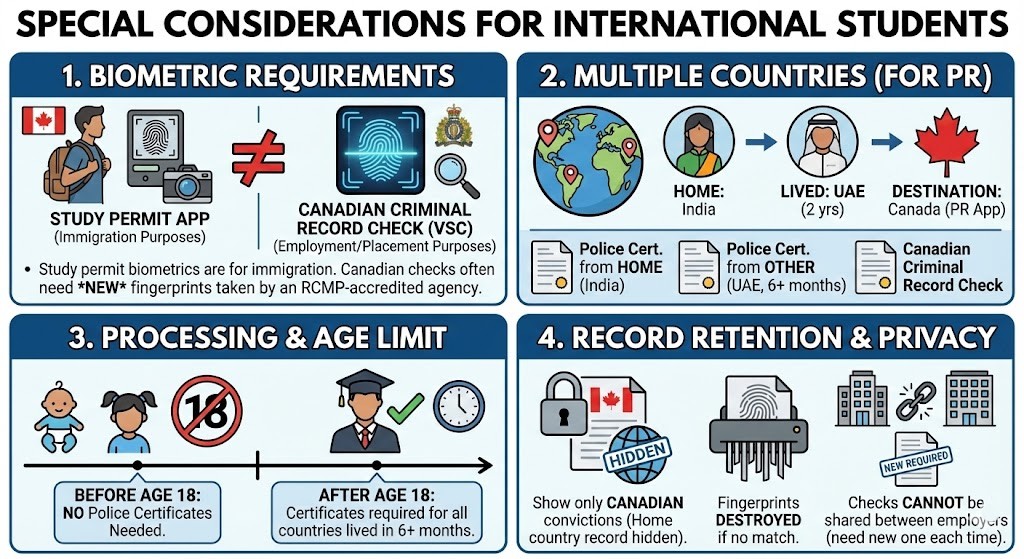
Biometric Requirements
All international students must provide biometrics (fingerprints and photo) as part of their study permit application. The Canadian immigration minister indicated that verification is primarily conducted through biometric data, such as fingerprints, which are cross-checked against international law enforcement databases.
What this means:
- Canada already has your fingerprints from your study permit application
- For Canadian criminal record checks, you may need NEW fingerprints taken by an RCMP-accredited agency
- Your study permit biometrics ≠ criminal record check fingerprints (different purposes)
Multiple Countries Consideration
If you’ve lived in multiple countries, you may need police certificates from each:
Example: Student from India who lived in UAE for 2 years before coming to Canada
For PR application needs:
- Police certificate from India
- Police certificate from UAE
- Canadian criminal record check
Processing: You don’t need to provide police certificates for any period of time before you were 18 years old.
Record Retention and Privacy
Canada takes privacy seriously:
What you should know:
- Criminal record checks show only Canadian convictions
- Your home country’s criminal record is NOT visible on Canadian checks
- Fingerprints are destroyed if no match is found
- Checks cannot be shared between employers (you need a new one each time)
Costs Breakdown: What to Budget
Criminal Record Check Costs in Brampton/GTA
Volunteer positions: FREE in Ontario (as of April 2022)
Student budget tip: Plan for at least 2-3 criminal record checks during your studies (initial job, field placement, graduation employment).
When You'll Need Police Clearance Certificates
While you don’t need them for study permits, you WILL need police clearance certificates for:
Permanent Residency Applications
Required from:
- Your home country
- Any country where you lived 6+ consecutive months since age 18
- Canada (if you’ve been here 6+ months)
Validity: By some principle, it should be valid for one year from the date of issue.
Citizenship Applications
After becoming a permanent resident and living in Canada for the required period, you’ll need police certificates for citizenship application.
International Work or Study After Canada
If you plan to work or study in another country after Canada, that country may require:
- Police certificate from your home country
- Police certificate from Canada (RCMP-certified)
The Brampton Advantage: Local Resources
Why Brampton International Students Choose Local Fingerprinting Services
Brampton has become a hub for international students, particularly from India. This means:
✅ Experienced providers who understand international student needs
✅ Convenient locations near college campuses and transit
✅ Multilingual support in many cases
✅ Fast turnaround with electronic submission
✅ Expert guidance on which check type you actually need
What to Look for in a Fingerprinting Service
- ✅ RCMP accreditation (MANDATORY)
- ✅ Electronic submission capability (faster results)
- ✅ Experience with international students
- ✅ Clear pricing with no hidden fees
- ✅ Convenient hours and location
- ✅ Digital/LiveScan technology (higher quality, fewer rejections)
Action Plan: What to Do Right Now
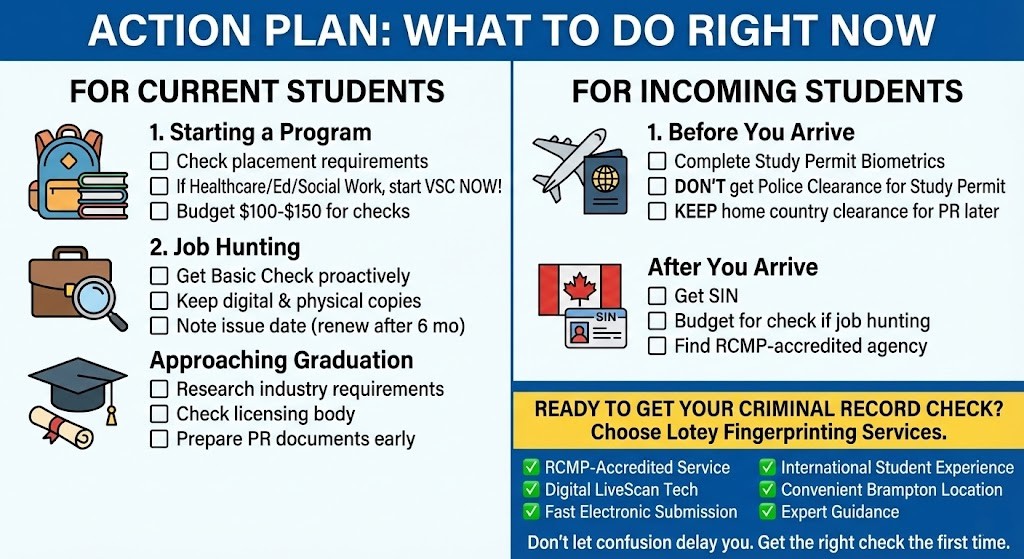
For Current Students
If you’re starting a program:
- Check your program requirements for field placements
- If healthcare/education/social work, start VSC process immediately
- Budget $100-$150 for criminal record checks during your studies
If you’re job hunting:
- Get a basic criminal record check done proactively
- Keep digital and physical copies
- Note the issue date (you may need to renew after 6 months)
If you’re approaching graduation:
- Research your industry’s requirements
- If regulated profession, check licensing body requirements
- Consider getting PR-required documents ready early
For Incoming Students
Before you arrive:
- Complete biometric collection when applying for study permit
- DON’T waste money on police clearance certificates for the study permit
- Keep your police clearance from home country (you might need it for PR later)
After you arrive:
- Get your SIN (Social Insurance Number)
- If job hunting, budget for criminal record check
- Find an RCMP-accredited fingerprinting agency near you
Ready to Get Your Criminal Record Check?
Lotey Fingerprinting Services specializes in helping international students navigate the criminal record check process with:
✅ RCMP-Accredited Service – Official, recognized results
✅ Digital LiveScan Technology – Higher quality, fewer rejections
✅ Fast Electronic Submission – Quickest processing times
✅ International Student Experience – We understand your unique needs
✅ Convenient Brampton Location – Easy access via transit
✅ Expert Guidance – We’ll help you determine which check you actually need
Don't let confusion delay your job, placement, or graduation. Get the right check the first time.
- Call: (+1) 905-840-9100
- Email: info@loteyfingerprinting.ca
- Book Online: https://loteyfingerprinting.ca/
FAQ: Your Questions Answered
Do I need a police clearance certificate to apply for a study permit?
No. As of May 2024, Canada’s Immigration Minister clarified that police clearance certificates are not required for individuals entering the country as temporary residents, including those on study permits. Canada uses biometric verification instead.
My employer asked for a "background check." What does that mean?
Ask for clarification! “Background check” is vague. Confirm whether they need a basic criminal record check, judicial matters check, or vulnerable sector check. The type matters.
Can I use my home country's police certificate for a Canadian job?
No. Canadian employers require Canadian criminal record checks that search Canadian databases. Your home country certificate doesn’t show your Canadian criminal history.
How long is a criminal record check valid?
Technically, checks don’t expire, but most employers and institutions require checks issued within the last 3-6 months. Always ask about their specific requirements.
I have no criminal record in my home country. Will my Canadian check be clear?
Yes, if you haven’t committed any crimes in Canada. Canadian criminal record checks only show Canadian convictions. Your record in your home country is separate.
Do I need fingerprinting for every criminal record check?
No. Only vulnerable sector checks require fingerprinting. Basic and judicial matters checks typically don’t require fingerprints unless there’s a potential match in the database.
Can I speed up the vulnerable sector check process?
Unfortunately, no. VSC processing times are set by RCMP and cannot be expedited. This is why it’s crucial to apply 3-4 months before you need it.
What if I was arrested but not convicted in my home country?
This won’t show on a Canadian criminal record check. However, if you’re applying for permanent residency, you may need to disclose this on your application forms even if it doesn’t appear on your police certificate.

Navneet Lotey
Navneet Lotey has over 5 years of experience in fingerprinting. He aims to deliver accurate, easy-to-understand fingerprinting solutions for individuals and businesses alike.
References
- Immigration, Refugees and Citizenship Canada (IRCC). (2024). Police certificates. Retrieved from https://www.canada.ca/en/immigration-refugees-citizenship/services/application/medical-police/police-certificates.html
- Dogen Law. (2025). Police Clearance Certificates for Canada Immigration: 2026 Guide. Retrieved from https://www.dogenlaw.com/police-clearance-certificate-for-canada-immigration/
- Nairametrics. (2024). Canadian government cancels police clearance certificates as 2024 requirement for study permits. Retrieved from https://nairametrics.com/
- The Business Standard. (2024). Canada drops police clearance requirement for students, temporary residents. Retrieved from https://www.tbsnews.net/
- Immigration, Refugees and Citizenship Canada (IRCC). (2025). Understanding student and temporary worker numbers in Canada. Retrieved from https://www.canada.ca/
- Daily Hive. (2026). Canada sees historic drop in international student arrivals. Retrieved from https://www.blogto.com/
- Immigration.ca. (2025). Top 20 Nationalities of International Students in Canada. Retrieved from https://immigration.ca/
- BorderPass. (2024). PCC Validity for Canada Study Permit. Retrieved from https://www.borderpass.ai/
- Royal Canadian Mounted Police (RCMP). (2024). Types of certified criminal record checks. Retrieved from https://rcmp.ca/
- Toronto Police Service. (2024). Police Record Checks. Retrieved from https://www.tps.ca/
- Triton Canada. (2024). Studying in Canada as a Foreign Citizen. Retrieved from https://www.tritoncanada.ca/
- Certn. (2025). Criminal Record Checks Canada FAQs. Retrieved from https://certn.co/
Disclaimer: This blog post is for informational purposes only and does not constitute legal or immigration advice. Policies and requirements may change. Always verify current requirements with IRCC, your educational institution, and potential employers. Consult immigration professionals for advice specific to your situation.
Share this guide: Help other international students avoid confusion by sharing this comprehensive comparison!