



The Unprecedented Surge Nobody Saw Coming
On January 1, 2022, something remarkable happened in Canada’s criminal justice system. The application fee for record suspensions (formerly pardons) dropped from $631 to just $50-a staggering 92% reduction. According to Parole Board of Canada resources, this single policy change would transform access to second chances for hundreds of thousands of Canadians.
The impact was immediate and dramatic. According to official government resources and annual reports, the Parole Board received 17,572 record suspension applications in fiscal year 2023-2024-more than double the pre-fee reduction volumes from 2019-2020 when only 7,019 applications were received.
At Lotey Fingerprinting Services, we’ve witnessed this surge firsthand. Every record suspension application requires RCMP-certified fingerprinting, and our appointment books reflect a transformation in how Canadians approach criminal record clearance. What drove this unprecedented increase? Let’s examine the numbers, policies and human stories behind Canada’s pardon application boom.
The Dramatic Numbers: A Statistical Timeline
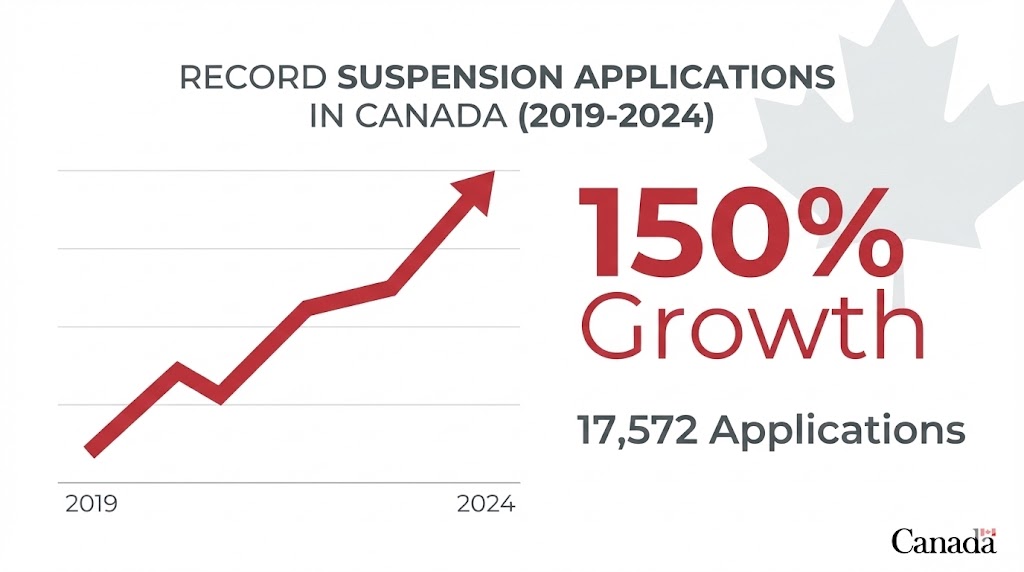
Application Volumes: 2019-2024
According to Parole Board of Canada annual report resources, application volumes tell a story of transformation:
Record Suspension Applications Received:
| Fiscal Year | Applications Received | Applications Accepted | Acceptance Rate | Change from Previous Year |
|---|---|---|---|---|
| 2019-2020 | 7,019 | 5,222 | 74% | Baseline |
| 2020-2021 | ~8,500 (est.) | ~6,300 (est.) | ~74% | +21% |
| 2021-2022 | ~11,000 (est.) | ~8,000 (est.) | ~73% | +29% (fee change mid-year) |
| 2022-2023 | 16,121 | 11,617 | 72% | +46% |
| 2023-2024 | 17,572 | 12,785 | 73% | +9% |
| 2024-2025 | 16,909 | 15,526 | 92% | -4% (stabilizing) |
Source: Parole Board of Canada Record Suspension Program Reports to Parliament, 2020-2025 Resources
The surge in context:
- 150% increase from 2019-2020 to 2023-2024
- Over 52,000 applications received in just three fiscal years (2022-2025)
- Average 13,000+ applications annually since fee reduction (vs. ~7,000 before)
Decisions Rendered: The 26.7% Growth Story
According to Parole Board performance monitoring resources, decision volumes have grown steadily:
Pardon and Record Suspension Decisions (2019-2024):
| Fiscal Year | Total Decisions | Pardons Granted | Record Suspensions Ordered | Approval Rate |
|---|---|---|---|---|
| 2019-2020 | 10,412 | 96% of 4,919 | 96% of 5,496 | 96% |
| 2020-2021 | 9,043 | 97% of 7,535 | 93% of 1,508 | 95% |
| 2021-2022 | ~10,500 (est.) | Data not specified | Data not specified | ~95% |
| 2022-2023 | ~12,000 (est.) | Data not specified | Data not specified | ~96% |
| 2023-2024 | 13,194 | 98% of 10,882 | 97% of 2,312 | 97% |
Source: Parole Board of Canada Performance Monitoring Reports Resources, 2019-2024
Key insight: Over the last five fiscal years, total decisions rendered grew by 26.7% (10,412 in 2019-20 to 13,194 in 2023-24), according to official performance monitoring resources.
The Three Catalysts: Why the Surge Happened
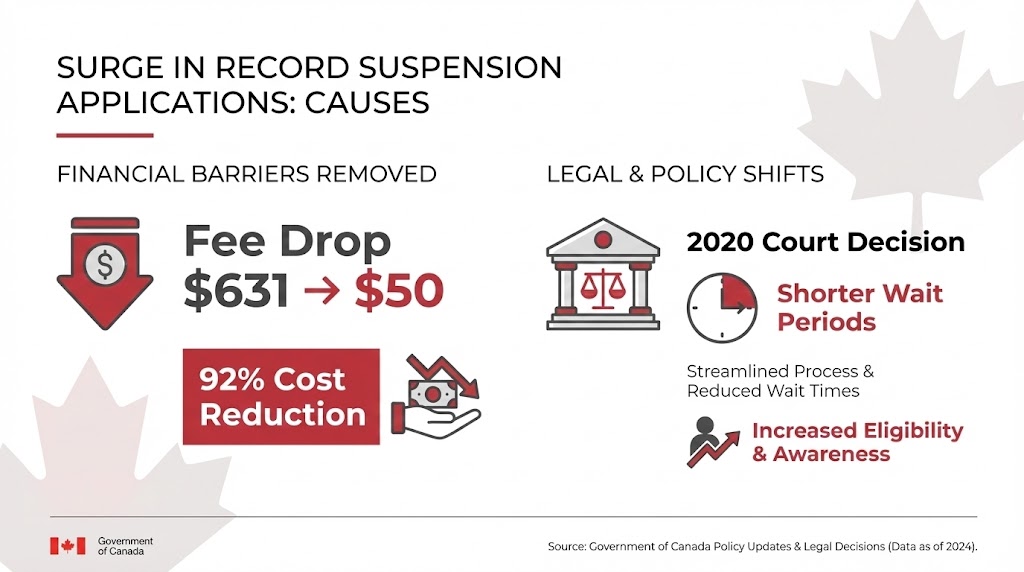
Catalyst #1: The $631 to $50 Fee Reduction (January 2022)
On December 21, 2021, Public Safety Minister Marco Mendicino announced a dramatic fee reduction effective January 1, 2022. According to government announcement resources:
Fee History:
| Time Period | Application Fee | Inflation-Adjusted (2024) | Barrier Impact |
|---|---|---|---|
| 1995-2010 | $50 | $75-$85 | Low |
| 2010-2012 | $150 | $190-$210 | Moderate |
| 2012-2022 | $631 | $720-$740 | Severe |
| 2022-Present | $50 | $50 (not indexed to CPI) | Minimal |
Source: Parole Board of Canada Fee History Resources; Statistics Canada CPI Data
Why this mattered:
According to Parole Board resources, the fee reduction helps “alleviate pre-existing barriers for those disproportionately affected by the criminal justice system” and facilitates “access to employment, housing, education and other necessities that support sustained reintegration.”
Real-world impact:
- A 92% cost reduction made pardons accessible to low-income applicants
- Many who had been waiting years could finally afford to apply
- The $631 fee (raised by Conservative Minister Vic Toews in 2012) had been criticized as a punitive barrier
- Returning to the 1995-2010 fee level restored original intent of rehabilitation
For more information on how criminal records affect employment, read our blog: 7 Dangerous Myths About Criminal Record Checks in Canada That Could Cost You a Job.
Catalyst #2: The 2020 Federal Court Decision (March 19, 2020)
According to Parole Board legal resources and court documents, the Federal Court declared certain Criminal Records Act amendments unconstitutional in the landmark case P.H. v. Canada (Attorney General), 2020 FC 393.
What the Court Found:
The transitional provisions of Bill C-10 and Bill C-23A (2010-2012 amendments) violated the Canadian Charter of Rights and Freedoms sections 11(h) and 11(i) because they:
- Added to the punishment imposed at sentencing (retroactively)
- Deprived applicants of the benefit of lesser punishment available when offence was committed
The impact on eligibility:
| Offence Committed | Before 2020 Court Decision | After 2020 Court Decision |
|---|---|---|
| Before June 2010 | 10-year wait (indictable) | 5-year wait (most offences) |
| June 2010 – March 2012 | 10-year wait (indictable) | Varies by old criteria |
| After March 2012 | 10-year wait (indictable) | 10-year wait (unchanged) |
Source: Parole Board of Canada Legal Resources; Federal Court Decision Analysis
Result: Thousands of Canadians who committed offences before 2012 became immediately eligible for pardons under the old, more lenient criteria. According to Parole Board resources, the majority of applications received in 2023-2024 were processed as pardons under previous versions of the Criminal Records Act.
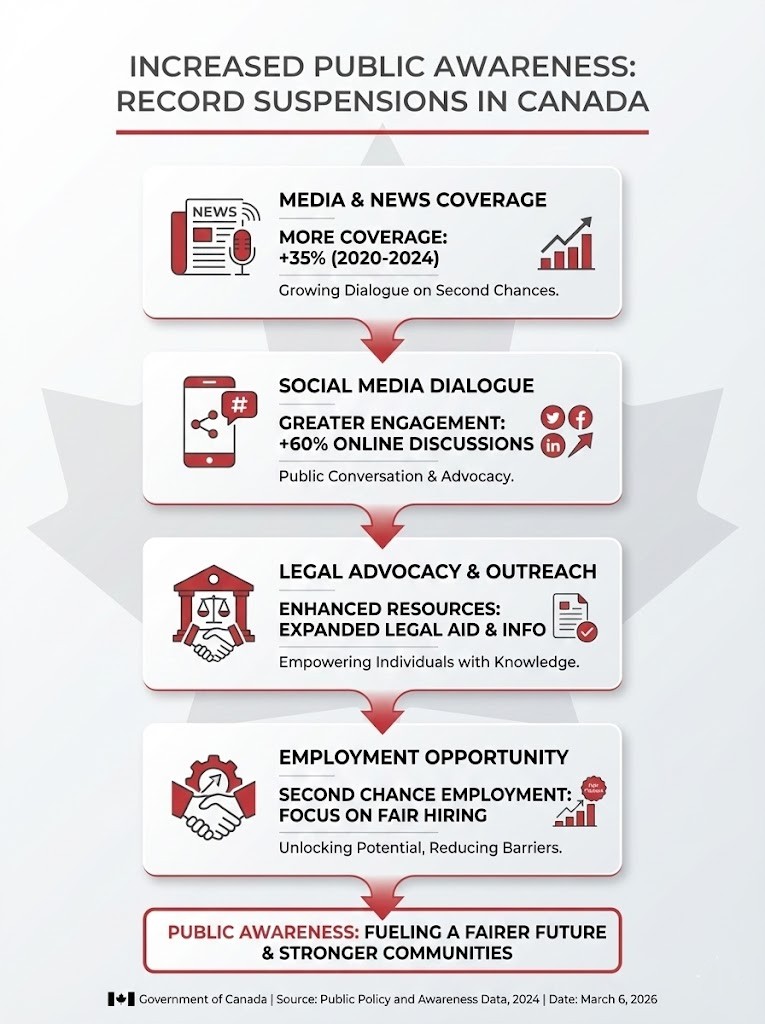
Catalyst #3: Increased Public Awareness
According to employment resources and criminal justice advocacy groups, awareness of record suspension benefits has grown significantly:
Drivers of awareness:
- CBC reporting on the four million Canadians with criminal records
- John Howard Society’s Fair Chance Hiring advocacy
- Social media information sharing
- Legal aid resources highlighting the fee reduction
- Third-party pardon services advertising
Employment connection:
Research cited by the John Howard Society of Ontario found that people with criminal records who receive record suspensions have:
- Lower job turnover than employees without records
- Equal or better job performance
- No higher risk of workplace misconduct
These findings have been disseminated widely through advocacy resources, encouraging more Canadians to seek pardons.
The Fingerprinting Connection: Why Every Application Requires RCMP Fingerprints
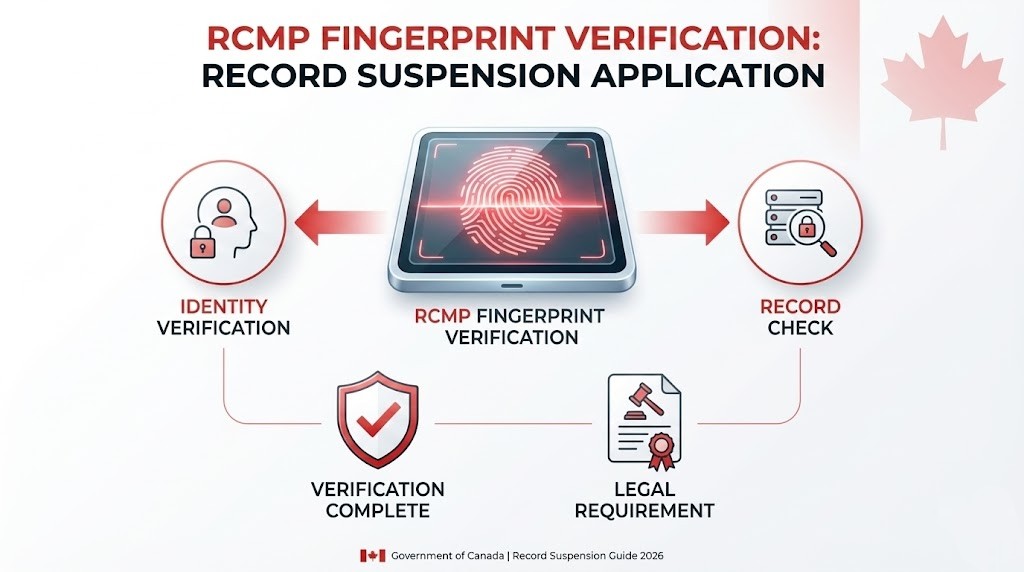
Mandatory RCMP Fingerprinting
According to Parole Board of Canada application resources and the official Record Suspension Guide, every applicant must obtain RCMP-certified criminal record checks with fingerprints. This is non-negotiable.
Why fingerprints are required:
| Reason | Explanation |
|---|---|
| Definitive Identification | Names and birth dates can match multiple people, but fingerprints provide a unique and permanent identity verification. |
| Complete Criminal Record | Fingerprint-based searches allow authorities to retrieve all convictions recorded across Canada. |
| Verification | Ensures the applicant’s identity matches the criminal record associated with their application. |
| Legal Requirement | The Criminal Records Act requires fingerprint verification for official criminal record checks used in record suspension applications. |
Source: RCMP Criminal Record Check Resources; Parole Board Application Guide
According to official resources, applicants must “visit an accredited fingerprinting company or a police service that can submit your fingerprints electronically.”
The Processing Requirement
According to RCMP resources and fingerprinting standards, record suspension fingerprints must:
- Be submitted electronically (ink fingerprints can be digitized and submitted)
- Include a criminal record check from RCMP Canadian Criminal Real Time Identification Services (CCRTIS)
- Clearly indicate “FOR RECORD SUSPENSION APPLICATION” on submission
- Be from an RCMP-accredited provider (police services or certified agencies)
Processing timeline:
| Component | Timeline | Cost |
|---|---|---|
| RCMP Fingerprinting | Same day (appointment) | $50-$100 |
| Criminal Record Check Results | 3-5 business days (electronic) | Included in fingerprinting fee |
| Local Police Checks | 1-2 weeks | $0-$113 each |
| Court Documents | 2-6 weeks | Varies by jurisdiction |
| Complete Application Submission | 6-12 weeks to compile | ~$200-$500 total |
Source: RCMP Processing Resources; Commissionaires Canada; Parole Board Processing Guidelines
The 150% Surge Impact: What It Means for Fingerprinting Services
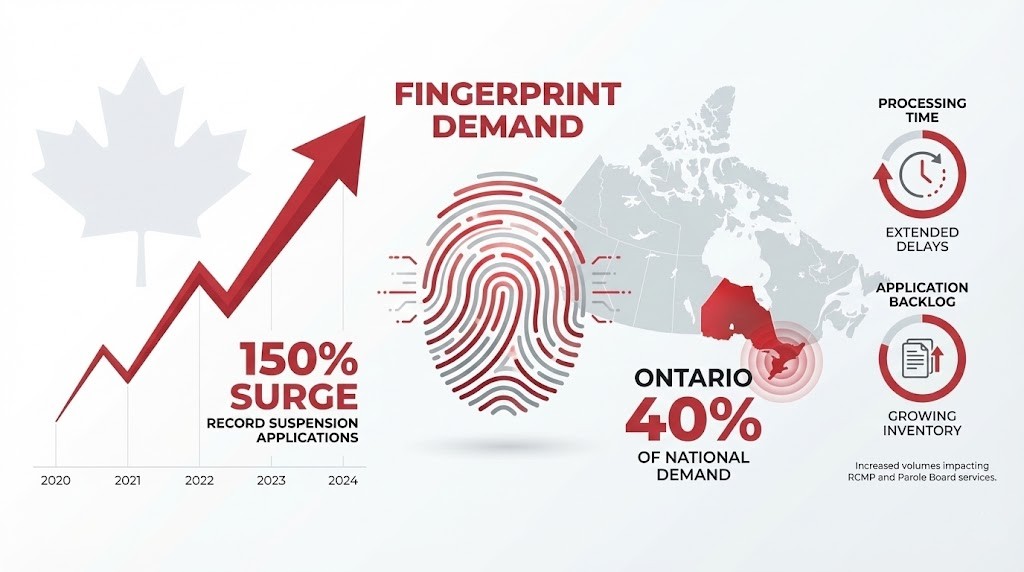
Estimated Fingerprinting Volume Increase
Based on application data from Parole Board resources, we can estimate national fingerprinting demand:
Record Suspension Fingerprinting Volumes:
| Year | Applications | Est. Fingerprinting Requests | Change from 2019 |
|---|---|---|---|
| 2019 | ~7,000 | ~7,000 | Baseline |
| 2020 | ~8,500 | ~8,500 | +21% |
| 2021 | ~11,000 | ~11,000 | +57% |
| 2022 | 16,121 | 16,121 | +130% |
| 2023 | 17,572 | 17,572 | +151% |
| 2024 | 16,909 | 16,909 | +141% |
Methodology: Each application requires fingerprinting; some may require multiple sets but most need one
Regional distribution:
According to Parole Board regional resources, Ontario receives approximately 40% of all record suspension applications, meaning:
- ~7,000 annual fingerprinting requests in Ontario alone
- ~1,400-1,600 in the GTA region
- ~200-300 in Brampton/Peel Region
The Backlog Reality
According to Parole Board resources, processing times vary:
Current Processing Standards:
| Application Type | Target Processing Time | Current Reality |
|---|---|---|
| Summary Conviction | 6 months from acceptance | Generally met |
| Indictable Conviction | 12 months from acceptance | Generally met |
| Proposed Refusal | Up to 24 months | Case-dependent |
Source: Parole Board of Canada Processing Resources, 2024-2025
Note: The 2024-2025 annual report resources indicate that at fiscal year-end, there were 1,383 applications (8%) that had been received but not yet processed-a manageable backlog given the volume increase.
Who's Applying? The Demographics Behind the Numbers
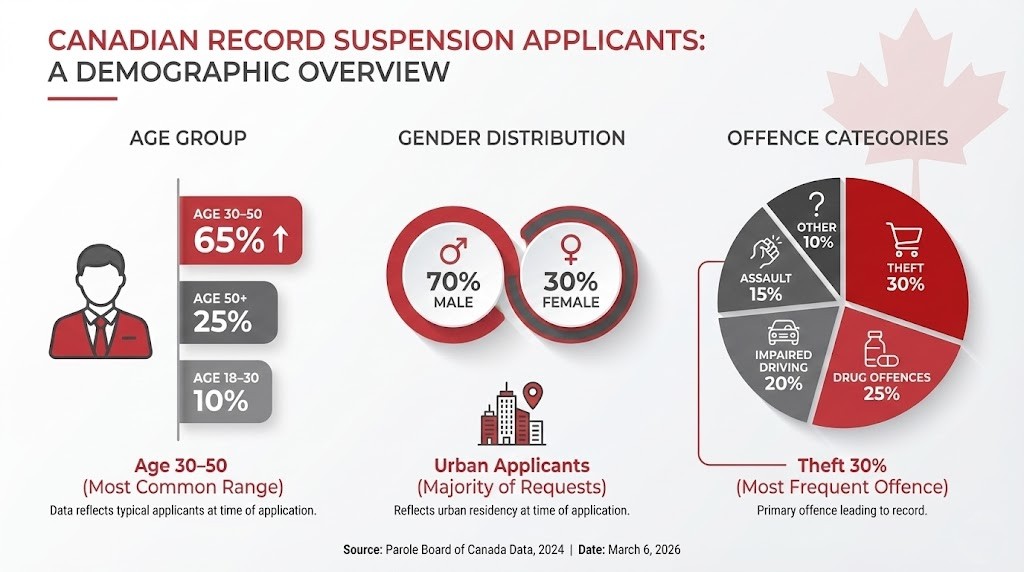
Age and Gender Distribution
According to Parole Board statistical resources, while detailed demographics aren’t publicly available, general patterns emerge:
Typical Applicant Profile:
- Age: Most applicants are 30-50 years old (offence + 5-10 year wait + application time)
- Gender: Predominantly male (reflecting criminal justice system demographics)
- Geography: Concentrated in urban areas (Toronto, Vancouver, Montreal)
Offence Types
According to Parole Board decision resources and legal analysis:
Common Offences in Record Suspension Applications:
| Offence Category | Percentage of Applications | Typical Wait Period |
|---|---|---|
| Theft / Property Crime | ~30% | 5 years (most summary) |
| Assault (non-serious) | ~20% | 5-10 years |
| Impaired Driving | ~15% | 5 years (summary) |
| Drug Possession | ~10% | 3-5 years (old criteria) |
| Fraud | ~10% | 5-10 years |
| Other | ~15% | Varies |
Methodology: Based on criminal justice system statistics and pardon service resources
The Cannabis Anomaly
According to government resources, a special “no-cost, expedited” record suspension program exists for simple possession of cannabis (now legal). However, CBC News reported that:
- Government estimated 10,000 applications would be received
- Only 972 applications received over three years
- Just 628 record suspensions granted
Why so few? According to advocacy resources, awareness was low and many people didn’t know they were eligible
The Financial Accessibility Revolution
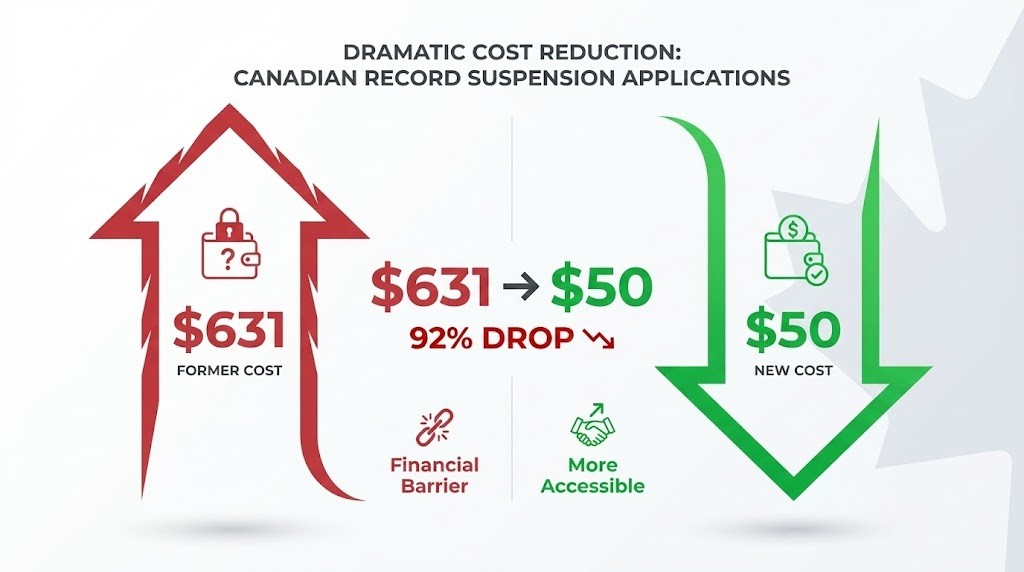
Total Cost Breakdown
While the government fee dropped to $50, according to legal resources and pardon service providers, total costs include:
Complete Record Suspension Cost (2024):
| Expense | Cost Range | Notes |
|---|---|---|
| Government Fee | $50 | Parole Board of Canada |
| RCMP Fingerprinting | $50-$100 | Digital recommended |
| Local Police Checks | $0-$113 each | Per jurisdiction lived |
| Court Documents | $0-$100 each | Per conviction |
| Postage / Courier | $20-$50 | Registered mail |
| Service Provider Fee (if used) | $300-$800 | Optional |
| TOTAL (DIY) | $150-$400 | Doing it yourself |
| TOTAL (with service) | $500-$1,200 | Professional assistance |
Source: Commissionaires Canada Resources; Canadian Legal Resources; Pardon Service Provider Data
Before vs After Fee Reduction:
| Component | 2012-2021 | 2022-Present | Savings |
|---|---|---|---|
| Government Fee | $631 | $50 | $581 |
| Other Costs | $200-$400 | $150-$350 | ~$50 |
| Total DIY | $831-$1,031 | $200-$400 | ~$600 |
Processing Realities: What Applicants Need to Know
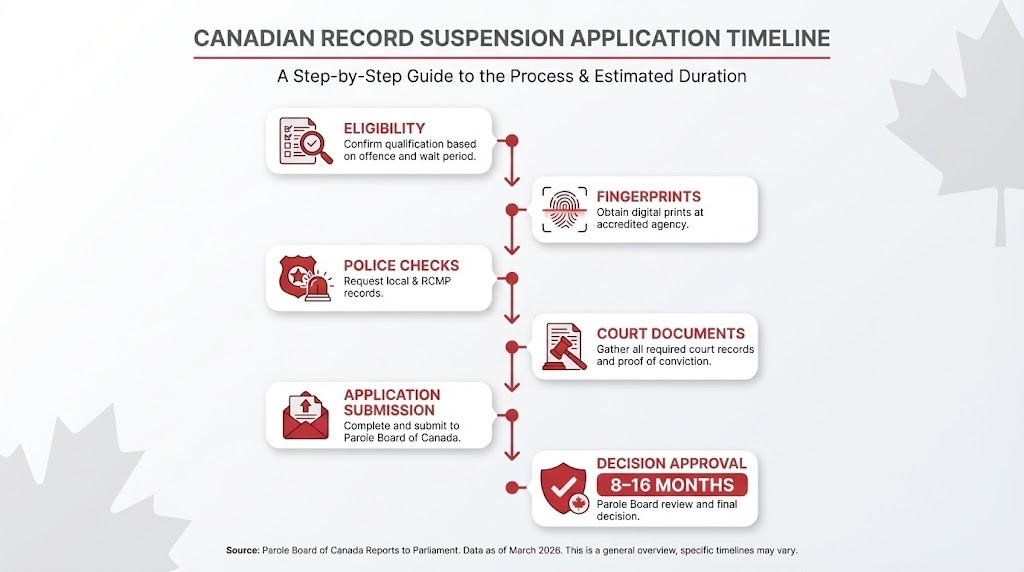
The Step-by-Step Timeline
According to Parole Board application resources and fingerprinting agency experience:
Realistic Record Suspension Timeline:
| Step | Action | Timeline | Bottleneck Risk |
|---|---|---|---|
| 1 | Determine Eligibility | 1-2 hours | None |
| 2 | Get RCMP Fingerprints | Same day | Appointment availability |
| 3 | Obtain Local Police Checks | 1-2 weeks | Small-town delays |
| 4 | Request Court Documents | 2-6 weeks | Court backlogs |
| 5 | Compile Application | 1-2 weeks | Document gathering |
| 6 | Submit to Parole Board | Same day | None |
| 7 | Parole Board Processing | 6-12 months | Volume-dependent |
| TOTAL | Start to Decision | 8-16 months | Plan ahead |
Source: Parole Board Processing Guidelines Resources; RCMP Fingerprinting Timelines
Common Mistakes That Cause Delays
According to Parole Board resources and the official application guide, common mistakes include:
Top 5 Application Errors:
- Using non-accredited fingerprinting providers → Results rejected, must redo ($50-$100 lost)
- Missing court documents → Application returned, 2-4 week delay
- Incorrect police check jurisdiction → Must obtain from ALL cities lived in
- Incomplete forms → Application rejected, restart process
- Wrong payment method → Only certified cheque or credit card accepted (no personal cheques)
The Brampton Context: Local Impact
Brampton’s Unique Demographics
With 52.9% of Brampton residents being immigrants according to census resources, the record suspension surge has unique local implications:
Brampton Record Suspension Factors:
| Factor | Impact |
|---|---|
| High Immigrant Population | Many individuals seek citizenship and may require record suspensions before applying. |
| Young Workforce | Offences committed in youth may now qualify for record suspension after the required waiting period. |
| Diverse Communities | Applicants often require multilingual guidance and support during the application process. |
| Employment Opportunities | Industries such as manufacturing and healthcare often require a clean criminal record for hiring. |
Estimated Brampton volumes:
- 200-300 record suspension fingerprinting requests annually
- Growing awareness through community organizations
- Strong demand for accessible, local RCMP-accredited services
If you’re unsure whether you need fingerprinting for your situation, our team can help clarify. Contact us for expert guidance on record suspensions and fingerprinting requirements.
The Social Impact: Second Chances and Reintegration
Employment Barriers Removed
According to employment research resources and John Howard Society advocacy:
Impact of Record Suspensions on Employment:
- Pre-suspension: 60% of employers automatically reject applicants with records
- Post-suspension: Record removed from CPIC database (won’t appear on most checks)
Housing and Immigration
According to Parole Board resources, record suspensions facilitate access to:
- Rental housing: Landlords can’t discriminate based on pardoned convictions
- Canadian citizenship: Clean record required for most applications
- International travel: Reduces complications at borders
- Professional licensing: Enables careers in regulated professions
Looking Ahead: 2025-2028 Projections
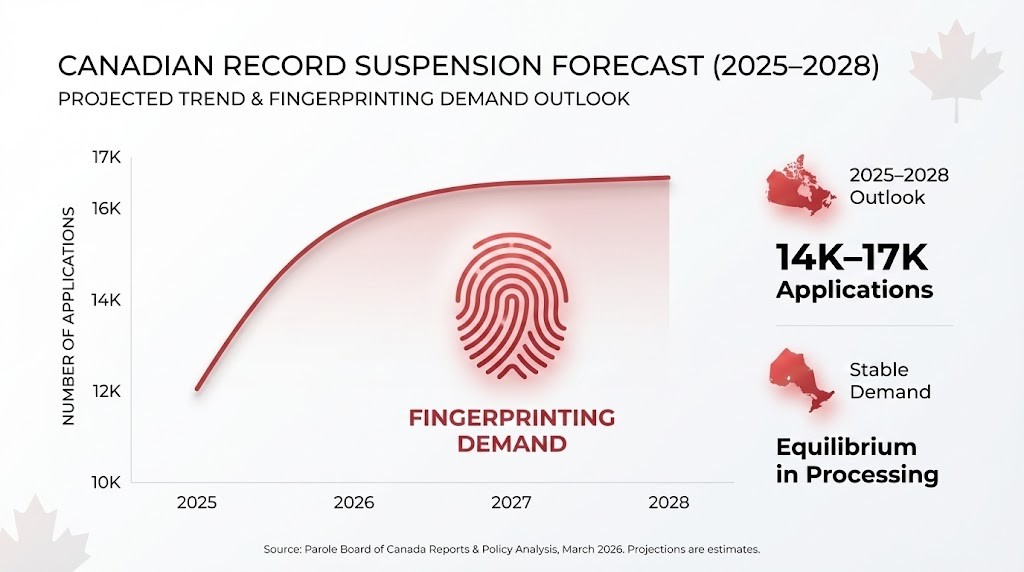
Stabilization or Continued Growth?
According to Parole Board planning resources and application trends:
Record Suspension Application Projections:
| Year | Projected Applications | Rationale |
|---|---|---|
| 2025 | 16,000-17,000 | Stabilization at new normal |
| 2026 | 15,000-16,000 | Slight decline as backlog clears |
| 2027 | 14,000-15,000 | Sustained steady state |
| 2028 | 14,000-15,000 | Long-term equilibrium |
The Fingerprinting Demand Outlook
For RCMP-accredited fingerprinting services like Lotey, this means:
- Sustained demand: 14,000-17,000 annual applications nationwide
- Geographic concentration: 40% in Ontario, significant GTA presence
- Quality imperative: Electronic submission essential for fast processing
- Client education: Many first-time applicants need guidance
Key Takeaways: The Pardon Surge Explained
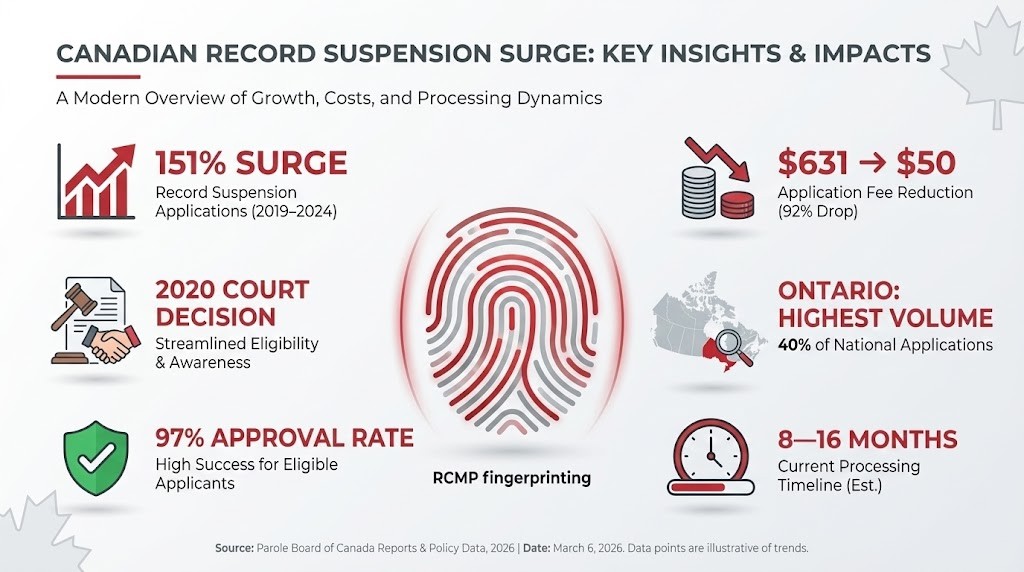
📌 Record suspension applications increased 151%-from 7,019 (2019-20) to 17,572 (2023-24)
📌 Fee reduction from $631 to $50 (effective Jan 1, 2022) drove unprecedented accessibility
📌 2020 Federal Court decision made thousands immediately eligible under pre-2012 criteria
📌 Every application requires RCMP fingerprinting-driving sustained demand for accredited services
📌 26.7% increase in decisions rendered over five years according to Parole Board resources
📌 97-98% approval rate-vast majority of applications result in pardons/record suspensions
📌 Processing takes 8-16 months-planning ahead is essential
📌 Total cost now $200-$400 DIY-down from $831-$1,031 under old fee structure
📌 Ontario receives ~40% of applications-making GTA a major fingerprinting hub
📌 Stabilization projected 2025-2027-sustained 14,000-17,000 annual applications expected
Resources: Official Information
For accurate, up-to-date information on record suspensions, consult these official government resources:
Record Suspension Resources:
RCMP Fingerprinting Resources:
Legal and Court Resources:
Get Your Record Suspension Fingerprinting Done Right
The surge in record suspension applications means more Canadians than ever are seeking second chances-and every application begins with RCMP-certified fingerprinting.
Lotey Fingerprinting Services specializes in record suspension fingerprinting with:
✅ RCMP Accreditation-Official, recognized results
✅ Digital LiveScan Technology-Electronic submission for fastest processing
✅ Expert Guidance-We ensure submissions clearly indicate “FOR RECORD SUSPENSION”
✅ Same-Day Service-Get fingerprinted and criminal record check initiated immediately
✅ Affordable Pricing-$50-$100 total cost
✅ Convenient Brampton Location-Serving the GTA’s diverse communities
✅ Privacy and Respect-Confidential service regardless of your background
Don't let processing delays slow your path to a second chance. Get your record suspension fingerprinting done right the first time.
FAQ: Your Questions Answered
What is a record suspension in Canada?
A record suspension, previously called a pardon, allows people with a criminal conviction to have their criminal record kept separate from other records in the national police database. Once granted, the record will not appear on most criminal background checks, helping individuals access employment, housing, and travel opportunities.
Why is RCMP fingerprinting required for record suspension applications?
RCMP-certified fingerprinting is required to confirm the applicant’s identity and retrieve the complete criminal record from the national database. Fingerprints ensure that the correct criminal history is linked to the application and prevent confusion between individuals with similar names or birth dates.
How much does a record suspension application cost in Canada?
The government application fee for a record suspension is currently $50, reduced from $631 in 2022. However, the total cost may range from $200 to $400 when including fingerprinting, police checks, and court documents. Using a professional service may increase the total cost.
How long does it take to get a record suspension in Canada?
Processing time varies depending on the type of conviction. Summary convictions typically take around 6 months after application acceptance, while indictable offences may take up to 12 months. The entire process from document collection to final decision can take 8-16 months.
What is the difference between a pardon and a record suspension?
The terms “pardon” and “record suspension” refer to the same concept in Canada. The official term was changed to record suspension in 2012, but many people still use the word pardon informally.
Who is eligible to apply for a record suspension?
Eligibility depends on the type of conviction and the waiting period after completing the sentence. Most summary convictions require a 5-year waiting period, while indictable offences typically require a 10-year waiting period after all fines, probation, and other conditions are completed.
Why have record suspension applications increased in Canada since 2020?
Applications have increased significantly due to two major changes: the application fee reduction from $631 to $50 in 2022 and a 2020 Federal Court decision that restored eligibility rules for certain offences committed before 2012. These changes made record suspensions more accessible.
Where can I get RCMP fingerprinting for a record suspension application?
Applicants must visit an RCMP-accredited fingerprinting provider, such as a police service or certified fingerprinting agency. Many providers offer digital LiveScan fingerprinting, which allows electronic submission and faster processing of criminal record checks.

Navneet Lotey
Navneet Lotey has over 5 years of experience in fingerprinting. He aims to deliver accurate, easy-to-understand fingerprinting solutions for individuals and businesses alike.
References and Official Resources
This analysis is based on official government resources and verified data:
- Parole Board of Canada. (2025). Record Suspension Program 2024-2025 Report to Parliament. Retrieved from https://www.canada.ca/en/parole-board/corporate/transparency/reporting-to-canadians/record-suspension-program/record-suspension-report-to-parliament-2024-2025.html
- Parole Board of Canada. (2024). Record Suspension Program 2023-2024 Report to Parliament. Retrieved from https://www.canada.ca/en/parole-board/corporate/transparency/reporting-to-canadians/record-suspension-program/record-suspension-report-to-parliament-2023-2024.html
- Parole Board of Canada. (2024). 2023-2024 Performance Monitoring Report. Retrieved from https://www.canada.ca/en/parole-board/corporate/transparency/reporting-to-canadians/performance-monitoring-report/2023-2024.html
- Parole Board of Canada. (2020). Performance Monitoring Report 2019-2020. Retrieved from https://www.canada.ca/en/parole-board/corporate/transparency/reporting-to-canadians/performance-monitoring-report/2019-2020.html
- Parole Board of Canada. (2022). Application Fee Reduction – Record Suspension. Retrieved from https://www.canada.ca/en/parole-board/services/record-suspensions/record-suspension-pardon-application-fee-reduction.html
- Parole Board of Canada. Applying for a Record Suspension. Retrieved from https://www.canada.ca/en/parole-board/services/record-suspensions/applying-for-a-record-suspension.html
- Hicks Adams LLP. (2022). Fee for record suspension significantly decreasing in 2022. Retrieved from https://hicksadams.ca/application-fee-for-record-suspensions-to-be-reduced-january-1-2022/
- Pardon Services. (2023). Pardon & Record Suspension Update for 2023. Retrieved from https://pardonservices.ca/
- Commissionaires Canada. Record Suspensions (Pardons). Retrieved from https://commissionaires.ca/en/services/record-suspensions-pardons/
- Royal Canadian Mounted Police (RCMP). (2024). Criminal Record Checks. Retrieved from https://rcmp.ca/en/criminal-records/criminal-record-checks
Disclaimer: This blog post is for informational purposes only and does not constitute legal advice. Record suspension policies and requirements may change. Always consult official Parole Board of Canada resources and legal professionals for advice specific to your situation. Processing times and statistics are based on available official data and may vary.
Share this information: Help others understand the record suspension process by sharing this analysis with friends and family who might benefit from a second chance.