



The $50,000 Mistake You Can't Afford to Make
Marcus, a 28-year-old IT professional in Brampton, turned down a job offer at a major Toronto bank. Why? He received an absolute discharge for shoplifting ten years ago as a teenager and believed he had a criminal record that would show up on every background check forever. He was wrong—that discharge was automatically purged from RCMP resources after one year. He lost a $50,000 salary opportunity because he didn’t understand how criminal record checks actually work in Canada.
He’s not alone. According to recent research from the John Howard Society of Ontario, roughly four in 10 employers automatically reject anyone with a record, regardless of the specifics—and many job seekers disqualify themselves based on dangerous misconceptions.
With approximately four million Canadians having criminal records and more than 700,000 job vacancies across the country, understanding the truth about criminal record checks isn’t just important—it could be the difference between employment and unemployment.
Let's debunk seven dangerous myths that could be costing you your career.
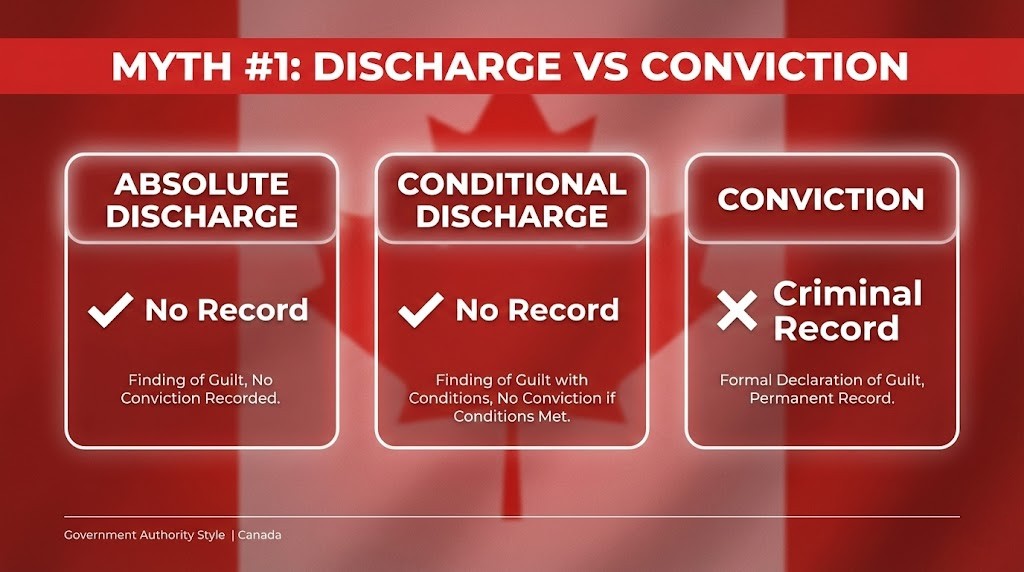
Myth #1: "An Absolute or Conditional Discharge Means I Have a Criminal Record"
The Myth
Many Canadians believe that receiving a discharge—whether absolute or conditional—creates a permanent criminal record that will follow them forever.
The Reality
This is completely false. An absolute or conditional discharge does NOT result in a criminal conviction or permanent criminal record. According to legal resources and the Criminal Code of Canada, discharges are specifically designed to avoid giving someone a criminal record.
Here's what actually happens:
| Discharge Type | Finding | Conviction? | Appears on CPIC | Auto-Purge Timeline |
|---|---|---|---|---|
| Absolute Discharge | Guilty | ❌ No | 1 year | After 1 year |
| Conditional Discharge | Guilty | ❌ No | 3 years | After 3 years |
| Conviction (any sentence) | Guilty | ✅ Yes | Until pardoned | Never (without pardon) |
Source: RCMP Criminal Records Resources, 2024; Criminal Code of Canada, Section 730
According to official legal resources, both conditional and absolute discharges prevent a permanent criminal record, offering a second chance for eligible offenders.
What This Means for Job Applications
On most job applications that ask “Do you have a criminal conviction for which a pardon has not been granted?” you can legally answer NO if you received a discharge. Legal resources confirm that even while serving probation for a conditional discharge, you do not have a criminal conviction.
The Dangerous Catch
While discharges don’t create criminal records, they DO appear on vulnerable sector checks during their “live” period (1 year for absolute, 3 years for conditional). This is where the confusion happens—and where you need accurate information from official resources.
Cost of the myth: Declining job opportunities you’re actually eligible for.
Myth #2: "All Background Checks Show the Same Information"
The Myth
Many Canadians believe there’s only “one type” of criminal record check and that all background checks reveal the same information to employers.
The Reality
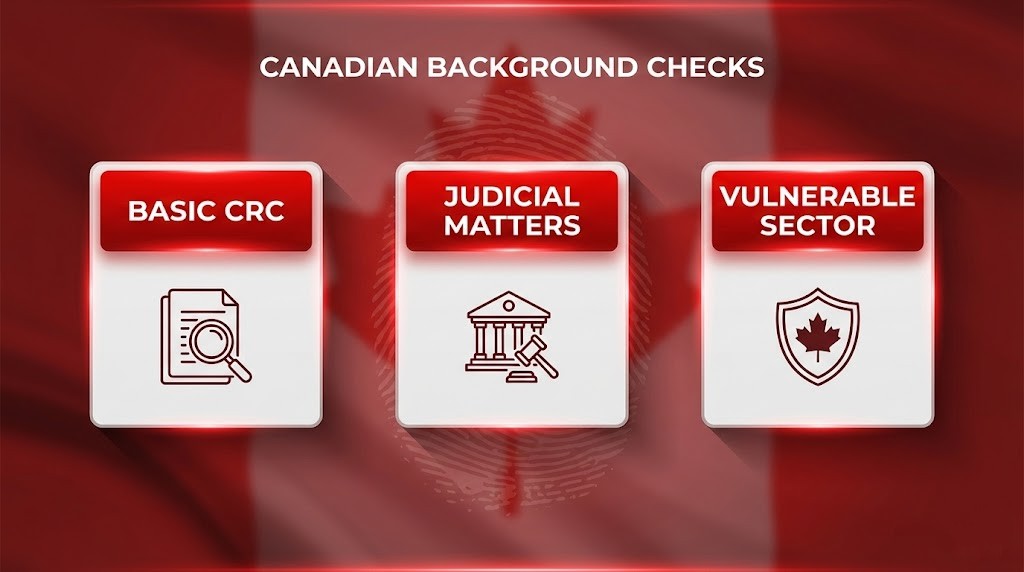
Canada has three distinct types of criminal record checks, each showing different information. Understanding which check an employer is requesting is crucial. According to employment screening resources:
| Check Type | What It Shows | Processing Time | Cost | Fingerprinting Required? |
|---|---|---|---|---|
| Basic Criminal Record Check (CRC) | Adult convictions, outstanding charges, warrants | 3–5 business days | $40–$75 | Usually No |
| Criminal Record & Judicial Matters Check | Everything above PLUS charges before courts and dispositions | 5–10 business days | $50–$85 | Usually No |
| Vulnerable Sector Check (VSC) | Everything above PLUS pardoned sex offenses (if match found) | 8–14 weeks | $65–$100 | Yes (if match required) |
Source: RCMP Criminal Record Check Resources, 2024-2025; Toronto Police Service Resources
When Each Type Is Required
According to industry resources and employment standards:
Basic CRC:
- Retail positions
- Food service
- General office work
- Transportation jobs (non-safety sensitive)
Judicial Matters Check:
- Financial services
- Government positions (non-security)
- Professional licensing
- Legal sector jobs
Vulnerable Sector Check:
- Healthcare workers
- Teachers and education staff
- Childcare providers
- Social workers
- Senior care positions
Critical point: Your discharge may show on a VSC within the 1-3 year window but NOT on a basic CRC after the purge period. Many job seekers don’t realize this distinction from official resources.
Cost of the myth: Withdrawing from positions where your record won’t even appear.
For more detailed information on what different background checks show, visit our comprehensive guide at Lotey Fingerprinting Services.
Myth #3: "My Criminal Record From 20 Years Ago Will Never Go Away"
The Myth
Many people believe criminal records are permanent and inescapable, lasting for life regardless of circumstances.
The Reality
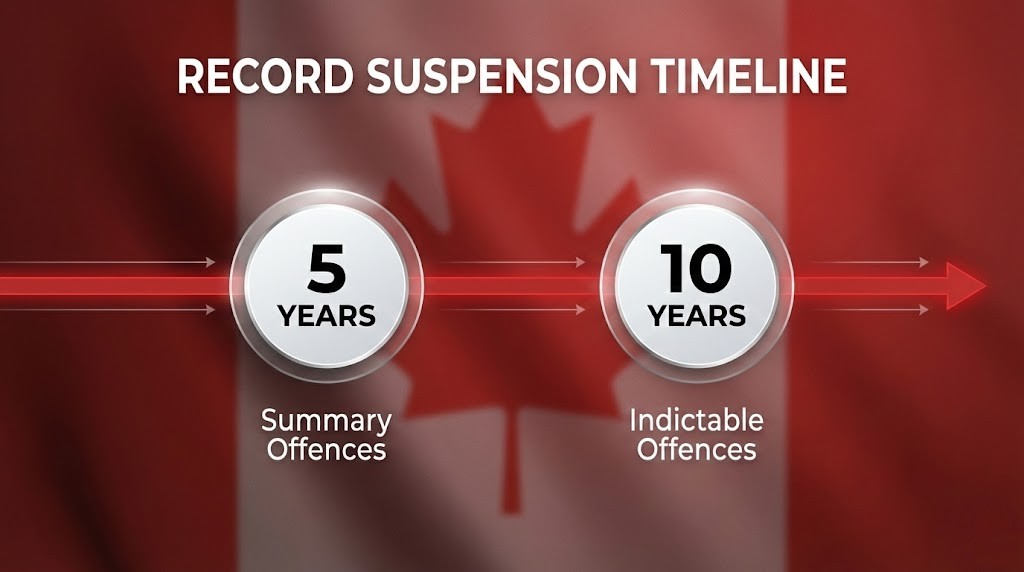
Canada has a Record Suspension (formerly called a pardon) program that allows eligible individuals to seal their criminal records from most background checks. According to Parole Board of Canada resources and official government data:
Eligibility Timeline for Record Suspensions:
| Conviction Type | Waiting Period | After Record Suspension |
|---|---|---|
| Summary Conviction | 5 years after sentence completed | Record sealed from most checks |
| Indictable Conviction | 10 years after sentence completed | Record sealed from most checks |
| Sexual Offense (involving minor) | Not eligible | Record never sealed |
Source: Parole Board of Canada Resources, 2024; Government of Canada Criminal Records Resources
The Numbers
While exact statistics aren’t publicly available on successful record suspensions, the Parole Board of Canada processes thousands of applications annually. According to research cited in John Howard Society resources, people with criminal records who receive record suspensions have lower job turnover, equal or better job performance, and no higher risk of workplace misconduct than employees without records.
What a Record Suspension Does:
- Seals your record from the RCMP Canadian Police Information Centre (CPIC) database
- Removes it from most standard background checks
- Allows you to legally say you don’t have a criminal record (on most applications)
- Restores eligibility for most employment opportunities
What it DOESN'T Do:
- Erase the conviction from all databases
- Guarantee removal from local police records (requires separate request)
- Prevent U.S. border agents from seeing the record
- Remove it from vulnerable sector checks (for sexual offenses)
Cost of the myth: Living under the shadow of a record that could be legally sealed.
Myth #4: "Employers Can Legally Reject Me for Any Old Criminal Record"
The Myth
Many Canadians believe employers have unlimited authority to reject job applicants based on criminal records, regardless of how old or irrelevant the offense is.
The Reality
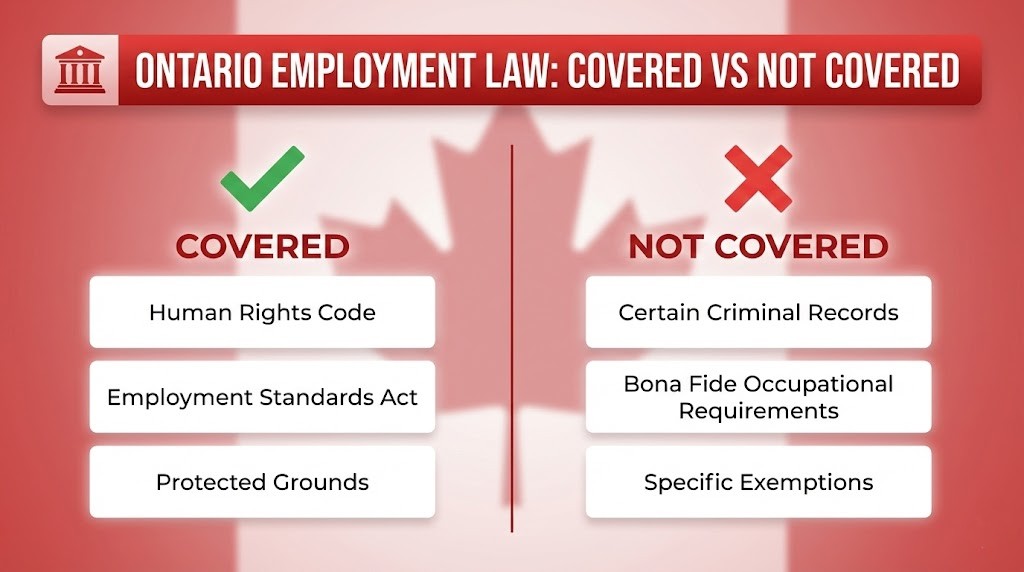
This is a complex legal gray area. According to employment law resources and Ontario’s Human Rights Code, the situation depends on your province and the nature of the offense.
What Ontario's Human Rights Code Protects:
| Protected Ground | What It Covers | What It DOESN’T Cover |
|---|---|---|
| “Record of Offences” |
|
|
Source: Ontario Human Rights Code Resources, 2024; John Howard Society Policy Analysis
According to legal resources, Ontario’s Human Rights Code prevents employers from discriminating based on pardoned convictions but does NOT protect people with unpardoned criminal records—even if the offense is old and unrelated to the job.
What This Means in Practice
Research from the John Howard Society of Ontario found that:
- 60% of employers believe criminal record checks should be used for all new employees
- 40% of employers automatically reject anyone with a record, regardless of specifics
- 75% of hiring managers have never knowingly employed anyone with a criminal record
However, employment law resources suggest employers should only reject candidates if:
- The record check is a bona fide occupational requirement
- The offense directly relates to job duties
- The record would adversely affect their ability to perform the job
The gap: While this is considered best practice, it’s not legally required in Ontario. According to legal resources, refusing to hire someone based on a criminal record is not considered discrimination under Ontario’s Human Rights Code.
Cost of the myth: Not knowing your rights or understanding when rejection is justified versus arbitrary.
Myth #5: "I Need to Disclose My Criminal Record to Every Employer"
The Myth
Some job seekers believe they must voluntarily disclose their criminal history to every potential employer, even if not asked.
The Reality
You are NOT required to volunteer information about your criminal record unless:
- The employer specifically asks
- You’re applying for a position with mandatory disclosure requirements
- The job application form explicitly requests the information
According to employment screening resources and legal guidance:
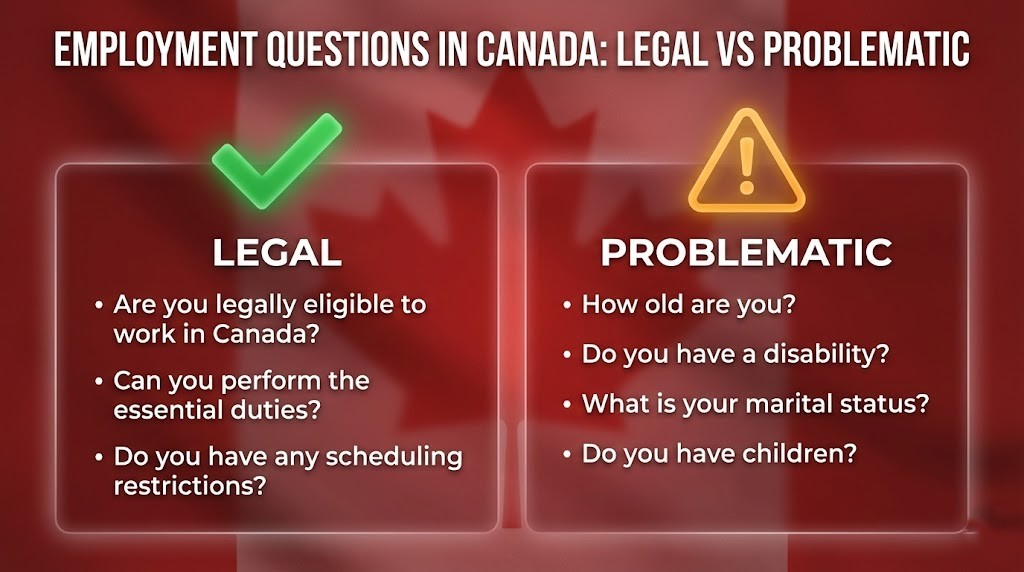
What Employers Can Legally Ask:
| Question Type | Legal? | When Used |
|---|---|---|
| “Do you have a criminal conviction for which a pardon has not been granted?” | ✅ Yes | Most common |
| “Have you ever been convicted of a criminal offense?” | ✅ Yes | Standard |
| “Have you ever been charged with a crime?” | ⚠️ Problematic | Charges ≠ convictions |
| “Provide consent for a criminal record check” | ✅ Yes | Must be relevant to position |
Source: Employment Standards Resources, 2024; CFIB Employment Guidelines
Critical Distinction: Charges vs. Convictions
According to legal resources:
- Charges are allegations that have not been proven
- Convictions are findings of guilt resulting in sentences
- Employers should NOT ask about charges (many do anyway, problematically)
- Withdrawn, stayed, or dismissed charges do NOT constitute a criminal record
If you were charged but not convicted: You can legally answer "No" to conviction questions. However, these charges may still appear on police databases unless you request file destruction.
When Disclosure IS Required
According to regulatory resources, mandatory disclosure applies to:
- Government security clearance positions
- Law enforcement jobs
- Legal professions (lawyers, paralegals)
- Financial regulatory positions (securities, banking oversight)
- Positions where legislation requires disclosure
Cost of the myth: Disclosing information unnecessarily and potentially sabotaging your application before it’s even reviewed.
Myth #6: "Getting Fingerprinted Means I'm Being Accused of Something"
The Myth
Fingerprinting is a standard identity verification tool, not an accusation. According to RCMP resources, fingerprinting serves as a definitive way to confirm your identity when name-based searches cannot provide certainty.
The Reality
Fingerprinting is a standard identity verification tool, not an accusation. According to RCMP resources, fingerprinting serves as a definitive way to confirm your identity when name-based searches cannot provide certainty.
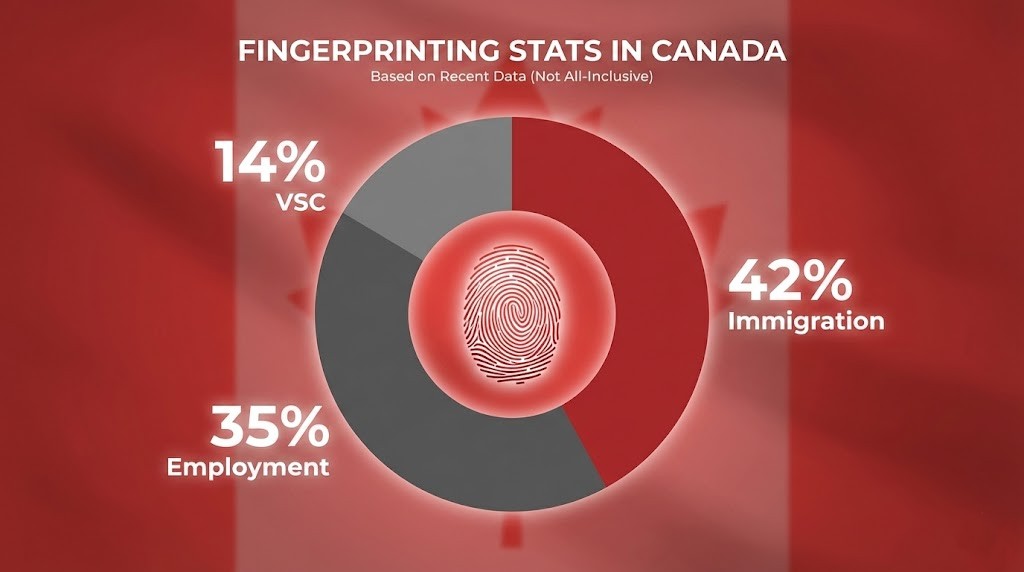
Who Gets Fingerprinted in Canada (Annually):
| Purpose | Estimated Volume | % of Total |
|---|---|---|
| Immigration & Citizenship | 300,000+ | 42% |
| Employment Background Checks | 250,000+ | 35% |
| Vulnerable Sector Checks | 100,000+ | 14% |
| Professional Licensing | 50,000+ | 7% |
| Other (FBI, International) | 15,000+ | 2% |
| TOTAL | 715,000+ | 100% |
Source: RCMP CCRTIS Resources, 2024; IRCC Annual Report Resources, 2024
When Fingerprinting Is Required
According to RCMP policy resources:
- Vulnerable sector checks: Mandatory if your gender and date of birth match someone on the pardoned sex offender database (not an accusation!)
- Immigration applications: If you’ve lived in Canada 6+ months since age 18
- Employer request: For positions requiring highest level of screening
- Professional licensing: Many regulated professions require fingerprint-based checks
Reality: Over 715,000 Canadians get fingerprinted annually for completely legitimate, non-criminal reasons. If getting fingerprinted meant everyone was suspected of crime, that would suggest three-quarters of a million Canadians are criminals—which is absurd.
For more information about why you might need fingerprinting, check out our blog: Does Getting Fingerprinted Mean You Have a Criminal Record? Debunking the #1 Fear.
Cost of the myth: Anxiety, stress, and potentially declining opportunities due to unfounded fears.
Myth #7: "I Can't Get a Job With a Criminal Record, So Why Bother Applying?"
The Myth
The most dangerous myth of all: that having a criminal record makes employment impossible, leading people to give up before even trying.
The Reality
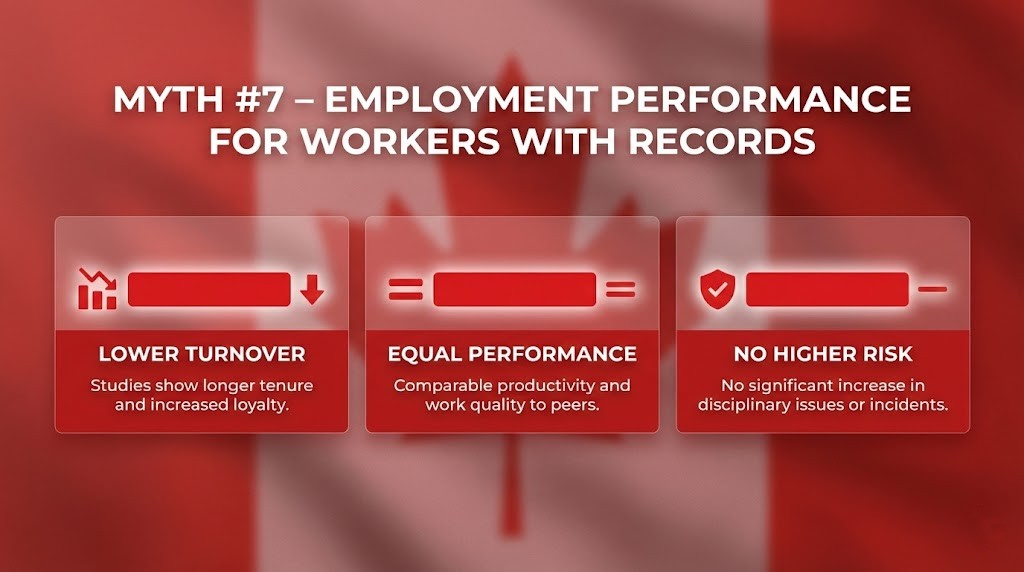
Four million Canadians have criminal records, yet millions are successfully employed. According to research resources cited by the John Howard Society:
Employment Outcomes for People with Records:
| Performance Metric | Workers with Records | Workers without Records |
|---|---|---|
| Job Turnover | Lower | Higher |
| Job Performance | Equal or Better | Baseline |
| Workplace Misconduct Risk | No Higher | Baseline |
Source: John Howard Society of Ontario Research Resources, 2024; U.S. and International Jurisdiction Studies
Where People with Records CAN Work
According to employment resources and industry standards, many sectors actively hire people with records:
Industries Open to Hiring:
- Manufacturing and skilled trades
- Transportation and logistics
- Food service and hospitality
- Technology (especially non-financial)
- Construction
- Warehousing and distribution
- Agriculture
- Small businesses (more flexible)
Positions Typically Restricted:
- Law enforcement
- Judiciary positions
- High-level financial oversight
- Federal government security positions
- Licensed professions (varies by offense relevance)
Fair Chance Hiring Movement
- Don’t conduct background checks until after conditional job offers
- Assess whether the record directly relates to job duties
- Consider the age and nature of the offense
- Evaluate rehabilitation efforts
Growing trend: More Canadian companies are adopting “fair chance” policies recognizing that past mistakes shouldn’t be permanent barriers.
Cost of the myth: Never applying and guaranteeing unemployment, when employment was actually possible.
The Four-Step Action Plan: What to Do Instead
Now that you know the myths, here’s what you should actually do:
Step 1: Get Your Own Criminal Record Check
Don’t guess what’s on your record. Get your own certified criminal record check from official resources to know exactly what shows up. This costs $40-$75 and takes 3-5 days for most people.
Why this matters:
- Discharges may have been auto-purged
- You may not have a record at all
- You’ll know exactly what employers will see
- You can correct errors or request file destruction
Step 2: Determine If You're Eligible for Record Suspension
If you have a conviction, consult Parole Board of Canada resources to determine eligibility:
- 5 years after summary conviction sentence completed
- 10 years after indictable conviction sentence completed
- Must have demonstrated good conduct
Cost: $50 government fee (as of 2024) plus potential lawyer fees Processing: 6-12 months typically Impact: Record sealed from most background checks
Step 3: Know Your Rights and Obligations
Consult provincial employment standards resources to understand:
- When employers can legally request checks
- What questions they can ask
- When you must disclose
- What protections exist in your province
Step 4: Be Strategic About Job Applications
According to career resources and employment counseling best practices:
Do:
- ✅ Apply for positions where your record is irrelevant
- ✅ Obtain record suspension if eligible
- ✅ Be honest if asked directly
- ✅ Prepare to explain rehabilitation efforts
- ✅ Highlight skills and positive references
- ✅ Focus on fair-chance employers
Don't:
- ❌ Volunteer information not requested
- ❌ Lie on applications (grounds for immediate termination)
- ❌ Disqualify yourself without applying
- ❌ Assume all employers reject records
- ❌ Give up on entire industries
Understanding Processing Times: What to Expect
If you do need a criminal record check for employment, understanding timelines from official resources is crucial:
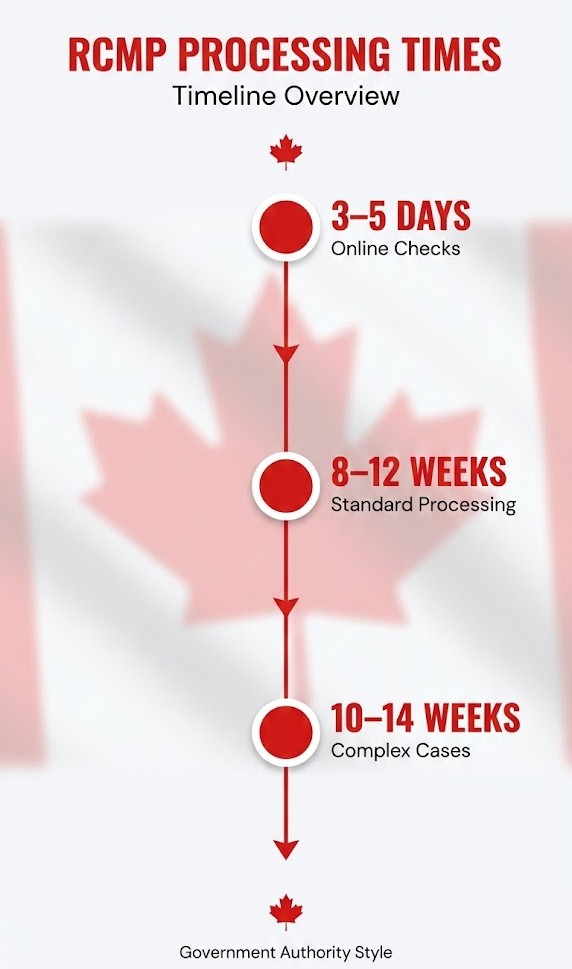
Standard Processing Times (RCMP Resources):
| Scenario | Processing Time | Key Factor |
|---|---|---|
| No Criminal Record (Electronic) | 3–5 business days | Clean record, digital submission |
| Possible Match Requires Review | 8–12 weeks | Manual verification needed |
| Vulnerable Sector Check | 10–14 weeks | Always requires fingerprinting |
| Record Suspension on File | 3–5 business days | Sealed from most checks |
Source: RCMP Criminal Record Check Processing Resources, 2024-2025
The Brampton Advantage: Why Local Matters
In Brampton, where 52.9% of residents are immigrants and diverse employment opportunities abound, understanding criminal record checks is particularly crucial. According to local resources and community data:
Brampton’s Unique Factors:
- High percentage of residents navigating background checks for first time
- Strong immigrant communities unfamiliar with Canadian systems
- Diverse employment base (healthcare, logistics, manufacturing, retail)
- Growing awareness of fair chance hiring practices
Why use local RCMP-accredited services:
- ✅ Understand community-specific needs
- ✅ Familiar with immigration-related checks
- ✅ Can explain process in plain language
- ✅ Digital submission = faster results
- ✅ Expert guidance on what check you actually need
If you need help navigating the criminal record check process, our team can guide you through every step. Contact us today for expert assistance
Key Takeaways: The Truth About Criminal Record Checks
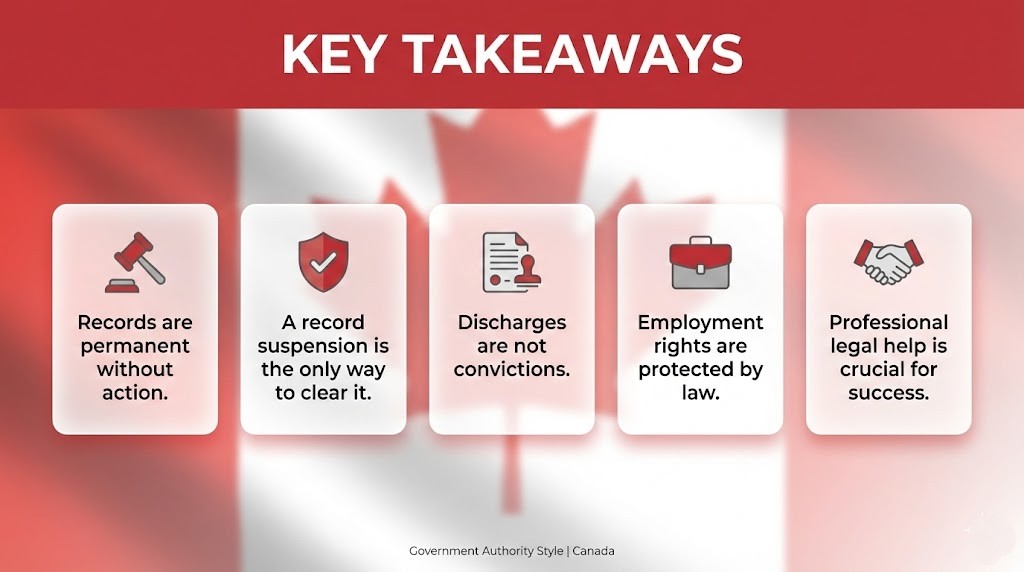
📌 Discharges (absolute/conditional) are NOT criminal convictions—they’re automatically purged after 1-3 years from RCMP resources
📌 Three types of checks exist—Basic CRC, Judicial Matters, and Vulnerable Sector (each shows different information)
📌 Record suspensions are possible—5 or 10 years after sentence completion, records can be sealed from most checks
📌 Ontario doesn’t fully protect unpardoned records—but employers should only reject for job-relevant convictions
📌 You don’t have to volunteer information—only answer what’s actually asked on applications
📌 Fingerprinting is standard verification—not an accusation (715,000+ Canadians fingerprinted annually for legitimate reasons)
📌 Employment IS possible with a record—4 million Canadians have records; research shows they perform as well or better than employees without records
📌 Fair chance hiring is growing—more employers recognize past mistakes shouldn’t be permanent barriers
📌 Get your own check first—know exactly what shows up before employers see it
📌 Use official resources—RCMP, Parole Board, employment standards guides provide accurate information
Resources: Where to Get Accurate Information
Don’t rely on myths and rumors. Consult these official government resources for accurate information:
Criminal Record Check Information:
Record Suspensions (Pardons):
Ready to Get Your Criminal Record Check?
Lotey Fingerprinting Services is your trusted RCMP-accredited provider in Brampton, offering:
✅ All Three Types of Checks—Basic CRC, Judicial Matters, Vulnerable Sector
✅ Digital LiveScan Technology—Higher quality, fewer rejections, faster processing
✅ Expert Guidance—We’ll help you understand exactly what you need
✅ Fast Electronic Submission—3-5 day processing for clear records
✅ Convenient Brampton Location—Serving the GTA’s diverse communities
✅ Transparent Pricing—No hidden fees, clear cost breakdown
✅ Mobile Services Available—Corporate and group fingerprinting
Don't let myths hold you back. Get accurate information and the right check the first time.
- Call: (+1) 905-840-9100
- Email: info@loteyfingerprinting.ca
- Book Online: https://loteyfingerprinting.ca/
FAQ: Your Questions Answered
How do Canada’s immigration cuts (2025–2027) affect fingerprinting requirements?
Canada’s reduced immigration targets mean fewer new permanent resident applications overall, which lowers total fingerprinting volume. However, fingerprinting is still mandatory for citizenship, in-Canada PR applicants, spousal sponsorships, and many employment background checks—especially in the GTA. Demand is decreasing, not disappearing.
Do permanent residence applicants still need RCMP fingerprinting?
Yes. If you have lived in Canada for 6 months or more since the age of 18, IRCC may require an RCMP-certified criminal record check, which involves fingerprinting. This applies to most in-Canada applicants and many family sponsorship cases.
Will RCMP processing times become faster due to lower immigration levels?
Potentially. With fewer immigration applications, electronic fingerprint submissions without criminal records may be processed faster. However, vulnerable sector checks and manual reviews can still take several weeks, so applicants should not delay fingerprinting.
Why does Brampton experience higher fingerprinting demand than other cities?
Brampton has one of the highest immigrant population percentages in Canada, with over half of its residents being foreign-born. Because many immigrants apply for PR, citizenship, employment, or licensing while living locally, fingerprinting demand in Brampton remains higher than the national average—even during immigration slowdowns.
Is digital (LiveScan) fingerprinting better than ink fingerprinting?
Yes. Digital LiveScan fingerprinting offers faster submission, lower rejection rates, and shorter overall processing times compared to ink-and-paper fingerprints. For immigration, employment, and vulnerable sector checks, digital fingerprinting is strongly recommended to avoid delays.
Even with lower immigration, why are fingerprinting services still in demand?
Immigration is only one source of fingerprinting demand. Employment screening, vulnerable sector checks, citizenship applications, professional licensing, and record suspensions generate tens of thousands of fingerprinting requests every year in the GTA. These services continue regardless of immigration target changes.

Navneet Lotey
Navneet Lotey has over 5 years of experience in fingerprinting. He aims to deliver accurate, easy-to-understand fingerprinting solutions for individuals and businesses alike.
References and Official Resources
This blog is based on verified information from official government resources and reputable legal sources:
- Royal Canadian Mounted Police (RCMP). (2024). Criminal Record Checks. Retrieved from https://rcmp.ca/en/criminal-records/criminal-record-checks
- Royal Canadian Mounted Police (RCMP). (2024). Processing Times and Fees. Retrieved from https://rcmp.ca/en/criminal-records/criminal-record-checks/processing-times-and-fees
- John Howard Society of Ontario. (2024). Rethinking Justice – Sentenced to Unemployment. Retrieved from https://www.johnhoward.on.ca/
- CBC News. (2024). 4 million Canadians have a criminal record. Companies not hiring them are missing out. Retrieved from https://www.cbc.ca/news/canada/toronto/criminal-records-canada-hiring-fair-chance-1.7099489
- CBC News. (2025). Ontario advocates launch employment toolkit, say criminal records ‘shouldn’t act as a life sentence’. Retrieved from https://www.cbc.ca/news/canada/toronto/john-howard-society-toolkit-criminal-record-employment-1.7442537
- CBC News. (2025). ‘Like a permanent barrier’: Ontario needs to change hiring rules for people with criminal records. Retrieved from https://www.cbc.ca/news/canada/toronto/criminal-record-ontario-employment-john-howard-society-1.7612524
- Vilkhov Law. (2025). Everything You Need To Know About Conditional and Absolute Discharge in Canada. Retrieved from https://vilkhovlaw.ca/everything-you-need-to-know-about-conditional-and-absolute-discharge-in-canada/
- LawNow Magazine. (2023). Absolute and Conditional Discharges in Canada. Retrieved from https://www.lawnow.org/absolute-and-conditional-discharges-in-canada/
- Legal Aid Ontario. Conditional Discharge. Retrieved from https://www.legalaid.on.ca/faq/conditional-discharge/
- Canadian Federation of Independent Business (CFIB). Criminal background checks – should you do them? Retrieved from https://www.cfib-fcei.ca/en/tools-resources/criminal-background-checks
- Indeed Career Guide. (2024). Can You Get a Job with a Criminal Record? Retrieved from https://ca.indeed.com/career-advice/finding-a-job/can-you-get-job-with-criminal-record
- Deel Blog. A Guide to Employee Background Checks in Canada. Retrieved from https://www.deel.com/blog/employee-background-check-canada/
- Rippling. Easy Guide to Employee Background Checks in Canada. Retrieved from https://www.rippling.com/blog/employment-background-check-in-canada/
- Accurate Background. (2019). Understanding the Differences in Canada Criminal Record Searches. Retrieved from https://www.accurate.com/blog/understanding-differences-canada-criminal-record/
Disclaimer: This blog post is for informational purposes only and does not constitute legal advice. Criminal record check policies and employment standards may vary by province and change over time. Always consult official government resources, legal professionals, or employment lawyers for advice specific to your situation. The information provided is based on Ontario regulations and may differ in other provinces.
Help others avoid these myths: Share this article with friends, family, and colleagues who might benefit from accurate information about criminal record checks in Canada.