



Table of Contents
If an employer, school, charity, or organisation has asked you for a Vulnerable Sector Check, you may be wondering: what exactly does that involve, why is it different from a regular criminal record check, and do you actually need to be fingerprinted?
These are the right questions to ask. A Vulnerable Sector Check is a distinct, specific type of police record check that exists in Canadian law for a defined purpose — and it is significantly more thorough than a standard criminal record check. Understanding what it involves, what records it searches, when fingerprints are required, and how to complete the process correctly in Ontario will save you time, help you avoid unnecessary delays, and ensure you meet your employer’s or organisation’s requirements on the first attempt.
This guide covers everything you need to know about Vulnerable Sector Checks in Canada in 2026 — from Lotey Fingerprinting, Brampton’s RCMP-accredited fingerprinting experts.
What Is a Vulnerable Sector Check?
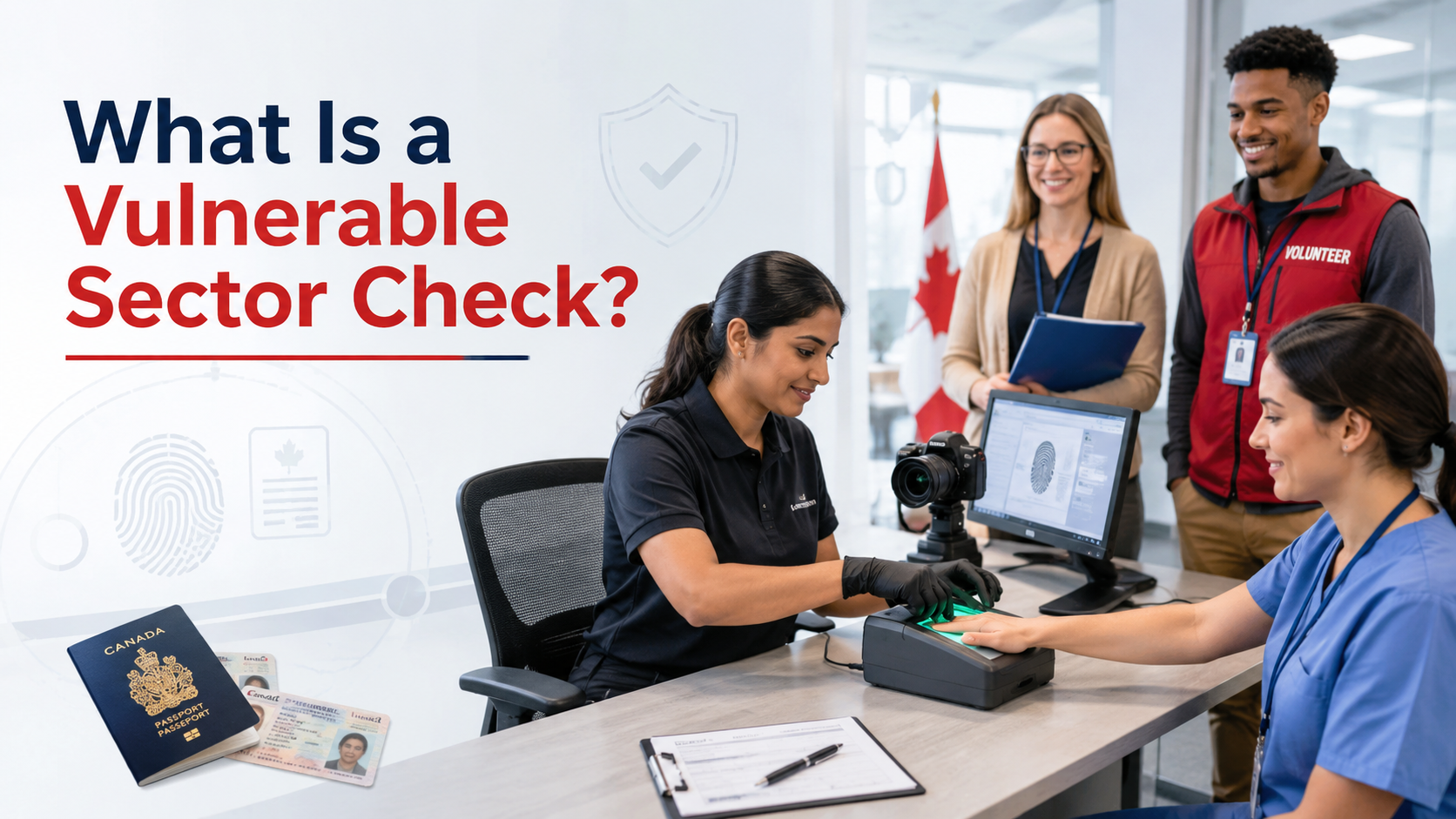
What Does a Vulnerable Sector Check Include?
A Vulnerable Sector Check (VSC) — sometimes called a Level 3 check — is a specialised type of police record check required when an individual will be in a position of trust or authority over vulnerable persons: children, the elderly, people with disabilities, and others who may be at risk.
According to the RCMP, a Vulnerable Sector Check is a police information check plus a search to determine whether a person has a record suspension (pardon) for sexual offences. That second component is what makes it fundamentally different from any other background check type in Canada.
Here is what a full Vulnerable Sector Check covers:
| Search Component | What It Checks |
|---|---|
| National Criminal Record Check | Convictions registered in Canada’s National Repository of Criminal Records. |
| Local Police Records | Records held by the local police service, including charges, local convictions, and relevant patterns of behaviour. |
| Judicial Matters | Outstanding charges, absolute and conditional discharges, and findings of not criminally responsible. |
| Pardoned Sex Offender Database | Checks whether the applicant has a record suspension (formerly known as a pardon) for a sexual offence — a unique component of the Vulnerable Sector Check (VSC). |
That last component is critical. Canada’s record suspension system allows individuals with criminal records to apply to have their record “suspended” — meaning it is removed from active police checks and the person is treated as if they have no criminal record. However, for Vulnerable Sector Checks, pardoned sexual offences are still disclosed if the person will be working with vulnerable individuals. This is an explicit exception to the privacy protections normally granted by a record suspension, and it is the reason the VSC exists as a distinct check type.
The authority to conduct a Vulnerable Sector Check is contained in the Criminal Records Act of Canada. It is an offence to request or conduct a VSC on someone when the need does not meet the requirements of that Act.
How Is a VSC Different from a Regular Criminal Record Check?
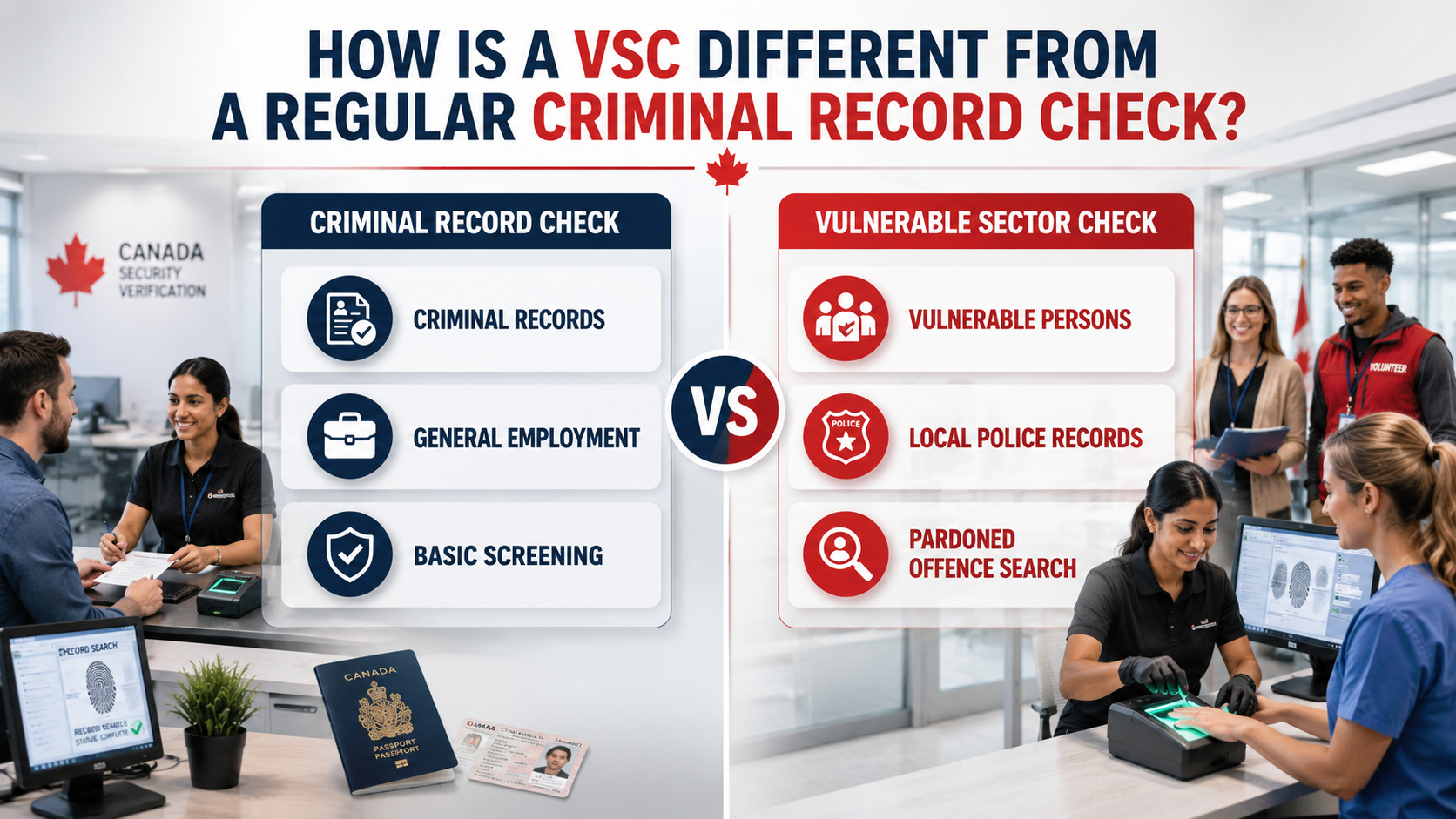
Vulnerable Sector Check vs Criminal Record Check — What’s the Difference?
Most people are familiar with a standard criminal record check — a search to confirm whether a person has a criminal record. A Vulnerable Sector Check goes significantly further:
| Feature | Criminal Record Check | Vulnerable Sector Check |
|---|---|---|
| National Criminal Records | ✅ Yes | ✅ Yes |
| Local Police Records | Sometimes (depends on police service) | ✅ Yes — always included |
| Judicial Matters (Charges & Discharges) | Sometimes | ✅ Yes |
| Pardoned Sex Offender Database | ❌ No | ✅ Yes — the defining feature |
| Who It Is For | General employment, licensing, travel | Positions of trust with vulnerable persons |
| When Fingerprints Are Required | Sometimes — when a name match is found | Sometimes — when name/date of birth matches a pardoned sex offender record |
| Legal Authority | General police powers | Criminal Records Act of Canada |
| Can Be Requested by Any Employer | ✅ Yes | ❌ No — only when legally justified by the role |
The key distinction: a standard criminal record check tells an employer whether you have been convicted of a crime. A Vulnerable Sector Check tells them whether you have a current or pardoned conviction for a sexual offence — something a standard check legally cannot reveal once a record suspension has been granted.
Who Needs a Vulnerable Sector Check?
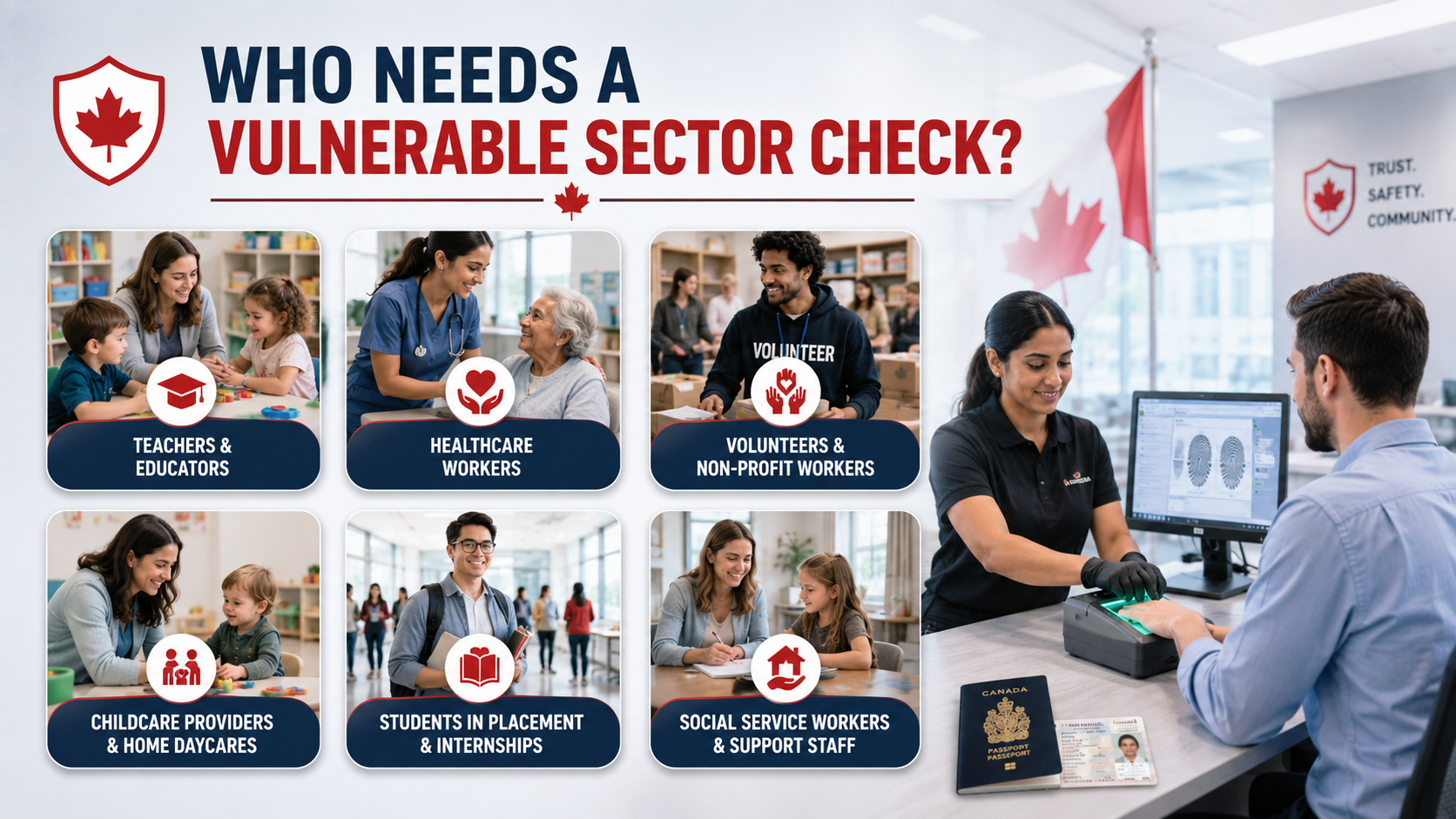
What Jobs and Volunteer Roles Require a Vulnerable Sector Check in Canada?
A Vulnerable Sector Check is required when a person will be in a position of trust or authority over vulnerable persons — not simply when they may have contact with vulnerable individuals. This distinction matters: having access to children or seniors is not itself the trigger. A direct position of authority or responsibility is the standard.
Education & Childcare:
- Teachers and educational assistants (public and private schools)
- Early childhood educators and daycare workers
- School bus drivers and monitors
- Tutors working privately with children
- Camp counsellors and youth programme directors
Healthcare & Social Services:
- Nurses, PSWs, and care workers in hospitals, long-term care, and home care
- Social workers and case managers working with vulnerable clients
- Group home and residential care staff
- Medical students and healthcare clinical placements
- Rehabilitation and therapy professionals
Sports & Community Organisations:
- Coaches and assistant coaches in minor sports leagues
- Referees and officials in youth sports
- Scout leaders, youth group leaders, and 4-H coordinators
- Big Brothers Big Sisters volunteers
- Youth mentorship programme participants
Volunteer Roles:
- Church and faith community volunteers working with children or seniors
- Food bank and social service volunteers with vulnerable clientele
- Hospital volunteers interacting with patients
- Home visiting volunteers for elderly or disabled individuals
Government & Regulated Sectors:
- Foster parents and prospective adoptive parents
- Immigration settlement workers
- Parole officers and correctional services staff
- Municipal workers assigned to vulnerable populations
Medical & Academic Placements:
- University of Toronto and other medical school students requiring Level 3 checks for clinical rotations in hospitals
- Nursing and allied health students completing placements in care settings
Important: The organisation requesting the check is responsible for determining whether a VSC is legally justified by the role. It is an offence under the Criminal Records Act to request a Vulnerable Sector Check when the role does not meet the legal criteria. If you believe your employer is requesting a VSC for a role where it is not appropriate, you may seek clarification with the employer or consult a legal professional.
When Are Fingerprints Required for a Vulnerable Sector Check?
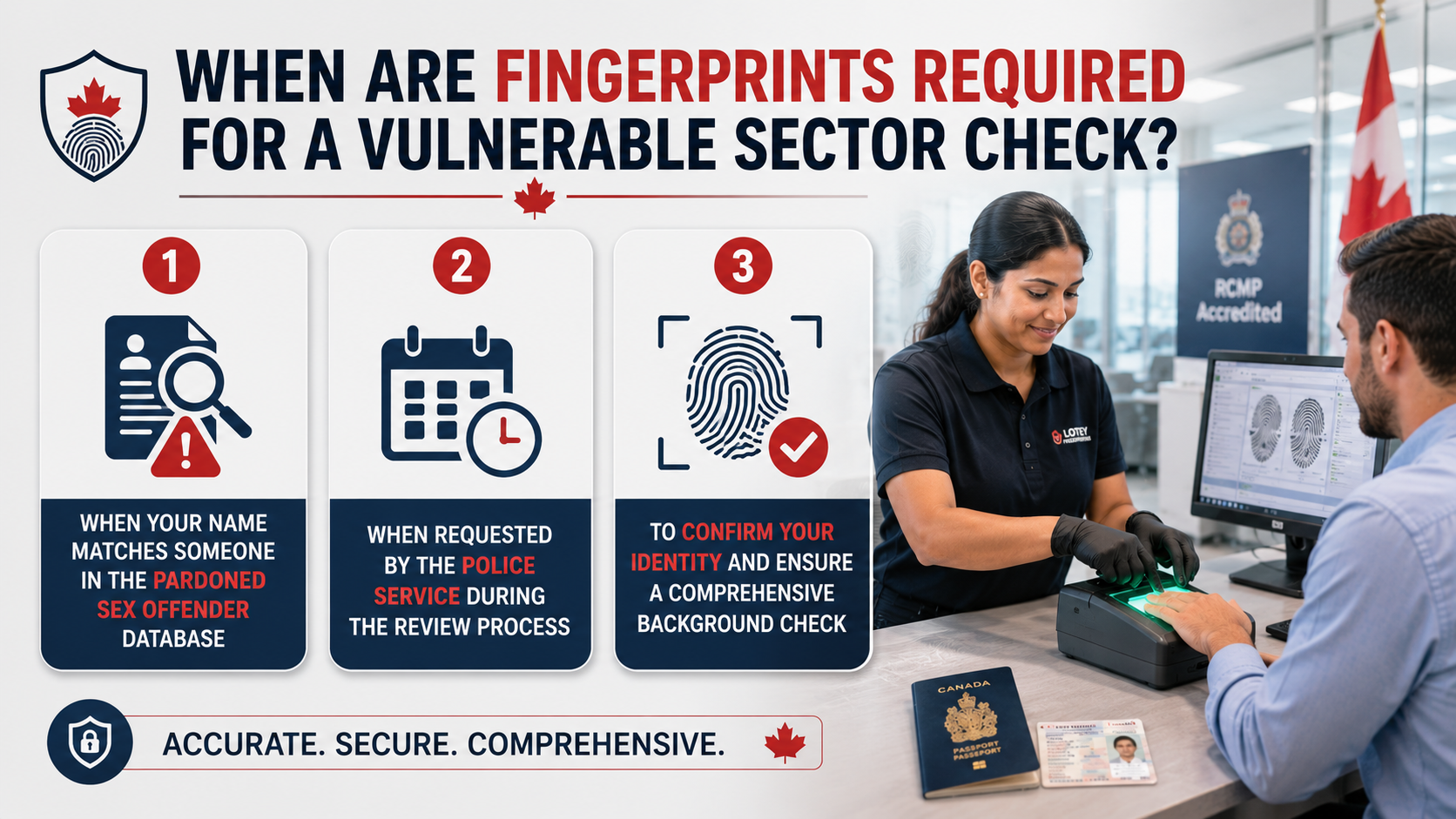
Does a Vulnerable Sector Check Always Require Fingerprinting?
No — fingerprinting is not always required for a Vulnerable Sector Check, but it may be required depending on the outcome of the name-based search phase.
Here is how it works:
Step 1 — Name and date of birth search The police service first conducts a name-based search against national and local criminal records databases and the pardoned sex offender database.
Step 2 — Possible match triggered If the search returns a name and/or date of birth match to a pardoned sex offender record, fingerprinting is required to confirm whether the applicant is — or is not — the same individual as the person in that record. This is the only reliable way to confirm or rule out identity in a potential match.
Step 3 — Fingerprint confirmation If fingerprinting is required, the applicant attends an RCMP-accredited fingerprinting agency (such as Lotey Fingerprinting in Brampton) to have digital livescan fingerprints taken. These are submitted electronically to the RCMP CCRTIS for comparison.
Step 4 — Result issued If the fingerprints confirm the applicant is not the individual with the pardoned record, the VSC is issued clear. If the fingerprints confirm a match, the pardoned sexual offence is disclosed to the requesting organisation.
The practical implication: Many VSC applicants never require fingerprinting. However, if your police service contacts you to request fingerprints as part of your VSC application, it does not mean you have a criminal record — it means a name or date-of-birth match was found in the database and identity confirmation is required. This is a normal part of the process for some applicants.
For countries not listed: contact your local police station first and ask for ink fingerprinting on either the RCMP C-216C form or the FBI FD-258 card. Both are internationally recognised and widely understood.
How to Get a Vulnerable Sector Check in Ontario
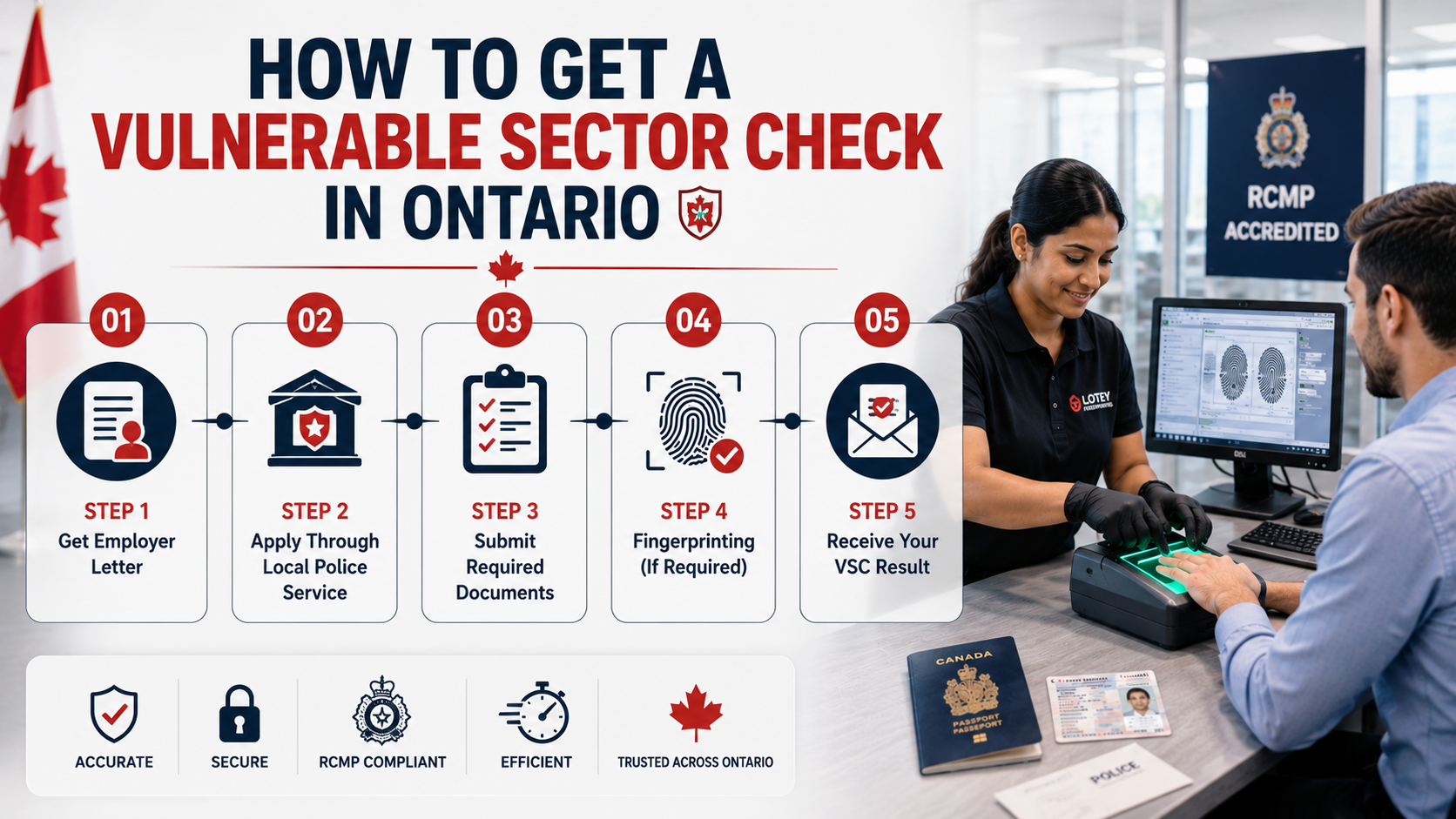
What Is the Process to Get a Vulnerable Sector Check in Ontario?
The VSC process in Ontario is managed primarily through local police services — not through private fingerprinting agencies. This is an important distinction from a standard RCMP criminal record check, which can be completed entirely through an accredited agency like Lotey Fingerprinting.
Step 1 — Get a letter from your requesting organisation Before applying, obtain a letter from the employer or organisation requesting the check. The letter must confirm:
- Your name
- The organisation’s name and address
- The reason for the check and the role you will perform
- A statement that the role involves a position of trust with vulnerable persons
Most police services in Ontario require this letter at the time of application.
Step 2 — Apply through your local police service In Ontario, VSC applications are submitted to:
- Toronto Police Service (if you reside in Toronto)
- Peel Regional Police (Brampton, Mississauga, Caledon)
- Ontario Provincial Police (OPP) (online application for OPP-jurisdiction areas)
- Durham Regional Police, Halton Police, York Regional Police, etc. (in their respective jurisdictions)
Most Ontario police services offer online applications for VSCs. You will need to provide identification documents and the organisation’s letter.
Step 3 — Pay the applicable fee Fees vary by police service. For example, the OPP charges $41.00 for record checks with a $90.00 additional fee if fingerprints are required. Volunteer VSCs are free at most police services — the federal RCMP processing fee is waived for volunteer positions.
Step 4 — Attend fingerprinting if required If your application triggers a possible match and fingerprinting is required, you will be contacted by the police service and directed to attend a fingerprinting session. In Brampton and the Peel Region, Peel Regional Police direct VSC fingerprinting appointments to their 11 Division location at 3030 Erin Mills Pkwy, and/or to accredited agencies like Lotey Fingerprinting depending on the specific requirement.
Step 5 — Receive your result If no criminal record and no match to the pardoned sex offender database: your VSC is issued — typically within a few days to weeks depending on volume. If a match is found requiring fingerprint confirmation: processing time extends while identity verification is completed.
How Long Does a Vulnerable Sector Check Take?
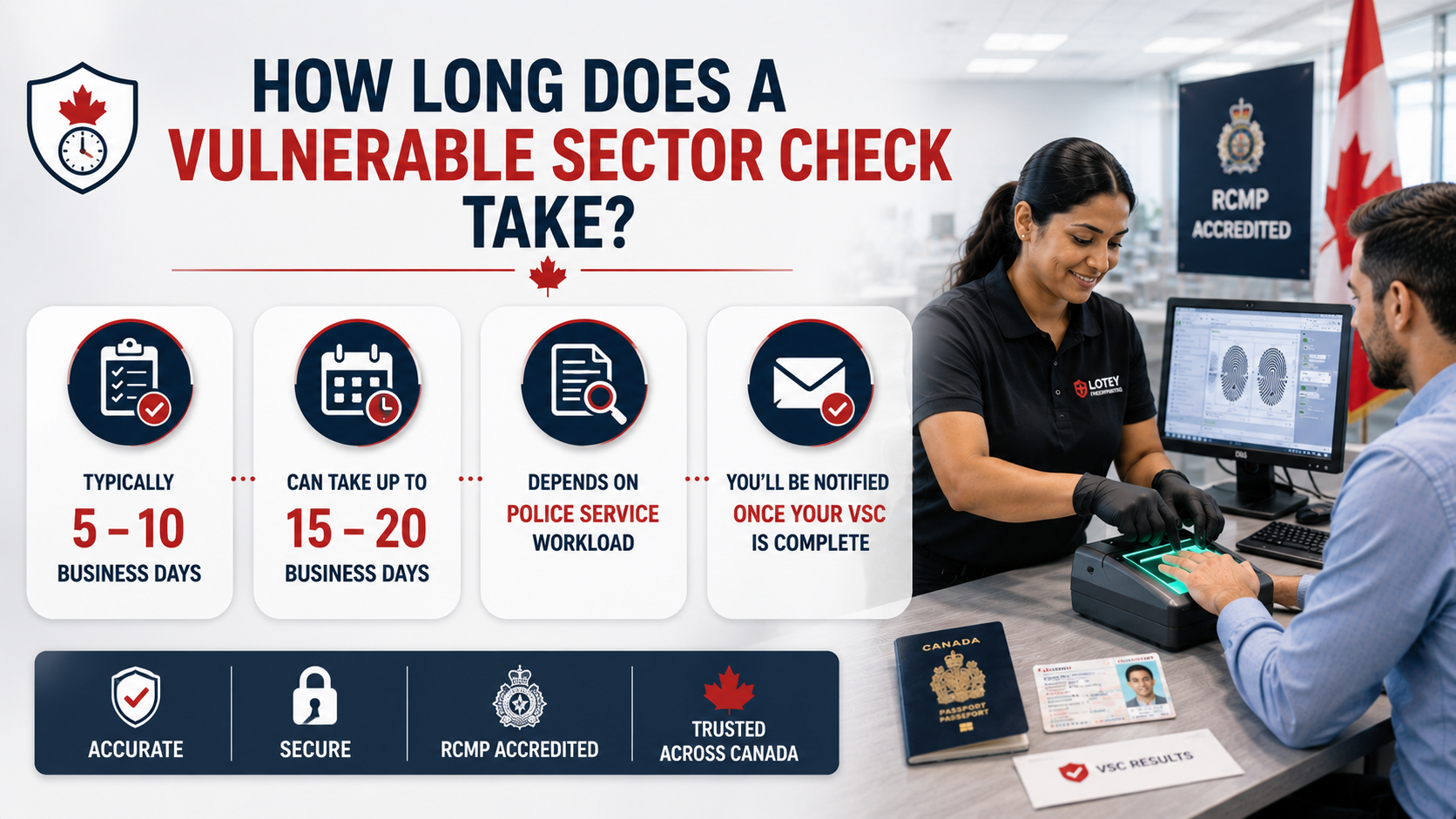
What Are the Processing Times for a Vulnerable Sector Check in Ontario?
Processing times vary by police service and whether fingerprinting is triggered:
| Scenario | Processing Time |
|---|---|
| No Match Found — No Fingerprints Required | A few days to 2–3 weeks (varies by police service) |
| Match Found — Fingerprinting Required, No Criminal Record Confirmed | Fingerprint submission to RCMP CCRTIS: 3 business days if no criminal record is found, or up to 120 business days if manual processing is required. |
| Volunteer Vulnerable Sector Check (No Fingerprints) | Typically 2–4 weeks |
| Peak Volume Periods (Back-to-School, September–October) | Processing may take longer due to increased Vulnerable Sector Check requests during late summer and fall. |
If RCMP CCRTIS processing is required (fingerprint-based verification), the standard processing times apply: 3 business days or less if no criminal record match is found; up to 120 business days if manual processing or a possible criminal record match requires investigation.
Practical tip: If you know you will need a VSC for a new position starting on a specific date, apply as early as possible — especially if applying during the September–October peak period when schools, charities, and community organisations onboard new volunteers and staff simultaneously.
What to Bring to Your Fingerprinting Appointment (If Required)
What Documents Do I Need for VSC Fingerprinting?
If fingerprinting is required as part of your Vulnerable Sector Check, bring the following to your Lotey Fingerprinting appointment:
Primary ID (government-issued, with photo):
- Canadian Driver’s Licence
- Passport (Canadian or foreign)
- Permanent Resident Card
- NEXUS Card
- Ontario Photo Card
Secondary ID (one of the following):
- Social Insurance Number (SIN) card
- Canadian Birth Certificate
- Student Card
- Military Employment Card
- Immigration document (Visa, Work Permit, Study Permit, Refugee document)
Also bring:
- Your police service referral or letter requesting fingerprinting as part of your VSC
- The original organisation letter confirming the purpose of your check
- Payment for fingerprinting service fees
Fees for Vulnerable Sector Checks
How Much Does a Vulnerable Sector Check Cost in Canada?
Fees have two components — the local police service fee and, where applicable, the federal RCMP processing fee:
| Application Type | Federal RCMP Fee | Local Police Fee |
|---|---|---|
| Volunteer VSC (Unpaid, No Expenses Compensated) | $0 (Waived) | Varies by police service (often free for volunteers) |
| Employment VSC (Paid Position) | $25 per submission | Set by police service — typically $25–$50 |
| Home Daycare VSC (Everyone in Home) | $25 per person | Varies by police service |
| Student Placement VSC | $25 | Varies by police service |
To have the federal fee waived for volunteer work, you must provide — at the time of fingerprinting — a letter from the volunteer organisation confirming:
- The organisation’s name and address
- Your name
- The reason for the check (e.g., coach, tutor)
- A statement that you will not be paid nor compensated for expenses
Can I Get a Vulnerable Sector Check from Outside Canada?
Can Someone Outside Canada Apply for a Vulnerable Sector Check?
No — a Vulnerable Sector Check must be applied for in person through a local police service inside Canada, and it is only issued for positions where work will be conducted inside Canada.
If you are outside Canada and an organisation requests a VSC, the RCMP and local police services will not provide one for positions outside the country. A standard RCMP Certified Criminal Record Check (available through accredited agencies including for applicants outside Canada) is typically sufficient for international employment or volunteer purposes. If you are in this situation, speak to the requesting organisation and explain that a VSC is only available for positions inside Canada — in most cases, an RCMP criminal record check is accepted as an equivalent.
Need Fingerprinting for Your Vulnerable Sector Check in Brampton or GTA?
If your VSC application has triggered a fingerprinting requirement, Lotey Fingerprinting Services in Brampton is RCMP accredited and ready to help. We provide fast, professional digital livescan fingerprinting for VSC applicants directed to an accredited agency by their police service. Our technicians are experienced, our EFCD devices are RCMP-certified, and your submission reaches the RCMP CCRTIS RTID system the same day.
We also provide fingerprinting for criminal record checks, immigration, Police Clearance Certificates, FBI submissions, and more — and mobile fingerprinting is available across the Greater Toronto Area.
FAQ: Your Questions Answered
What is a Vulnerable Sector Check and what does it include?
A Vulnerable Sector Check (VSC) is a specialised type of police record check required in Canada when a person will be in a position of trust or authority over vulnerable individuals — children, the elderly, or people with disabilities. It includes a search of national and local criminal records, judicial matters (charges, discharges), and — uniquely — a search of the pardoned sex offender database. The pardoned sex offender component is what distinguishes it from all other criminal record check types. Even if a person has been granted a record suspension (formerly pardon) for a sexual offence, that offence is still disclosed on a Vulnerable Sector Check. The authority for the VSC is the Criminal Records Act of Canada.
Do I always need fingerprints for a Vulnerable Sector Check?
Not always. Fingerprinting is only required during a VSC if the initial name and date of birth search returns a possible match to a pardoned sex offender record. In that case, fingerprints are taken to confirm whether you are — or are not — the same individual as the person in the pardoned record. Many VSC applicants complete the process without ever needing to be fingerprinted. However, if your police service contacts you to arrange fingerprinting, it does not indicate that you have a criminal record — it simply means a name or date-of-birth coincidence in the database needs to be resolved through identity confirmation.
What is the difference between a criminal record check and a Vulnerable Sector Check?
A standard criminal record check searches Canada’s National Repository of Criminal Records and returns any active criminal convictions associated with your name. A Vulnerable Sector Check goes further: it includes local police records, judicial matters, and — critically — a search of the pardoned sex offender database. A person who has been granted a record suspension for a sexual offence would appear clean on a standard criminal record check but would be disclosed on a Vulnerable Sector Check. This is why the VSC is reserved specifically for positions involving trust over vulnerable persons.
Who can request a Vulnerable Sector Check from me?
Only organisations where you will hold a position of trust or authority over vulnerable persons can legally request a Vulnerable Sector Check. It is an offence under the Criminal Records Act to request or conduct a VSC when the role does not legally require it. If you are asked for a VSC for a role that does not involve working with children, the elderly, or other vulnerable individuals, you are entitled to seek clarification from the requesting organisation. Employers or organisations unsure about whether their specific role qualifies should consult legal counsel or their provincial regulatory body.
How long does a Vulnerable Sector Check take in Ontario?
Without fingerprinting, most VSCs in Ontario are returned within a few days to 2–3 weeks depending on the police service and current volumes. September and October are typically the highest-volume months, when schools, community organisations, and charities process large numbers of new volunteers and staff. If fingerprinting is triggered by a possible match, processing extends to the RCMP CCRTIS timeline — 3 business days or less if no criminal record is found, or up to 120 business days if manual processing is required. Applying as early as possible before your start date is strongly recommended.
Is a Vulnerable Sector Check free for volunteers?
Yes — the $25 federal RCMP processing fee is waived for applicants seeking a VSC for unpaid volunteer work. To qualify for the waiver, you must provide a letter from the volunteer organisation at the time of fingerprinting (if fingerprinting is required) confirming your name, the organisation, the purpose of the check, and that you will not be paid or compensated for expenses. Many police services also waive their local service fees for volunteer VSC applications. Confirm with your local police service whether their service fee applies to your volunteer VSC.
Can I use a Vulnerable Sector Check from a previous employer for a new role?
VSCs are typically issued to a specific organisation for a specific purpose, and most organisations require a new VSC for each new position rather than accepting an existing one. The recency of the check also matters — many organisations require a VSC dated within the past 6 or 12 months. Check with your new employer or organisation about their specific requirements. Some may accept a recent VSC from a previous role in the same sector; others will require a fresh application.
Can I get a Vulnerable Sector Check if I live outside Canada?
No — a Vulnerable Sector Check must be requested in person through a local police service inside Canada, and it is only issued for roles being performed inside Canada. If you are outside Canada and an organisation requests a VSC, the RCMP and local police services will not process it for foreign employment or volunteer purposes. In most such cases, a standard RCMP Certified Criminal Record Check — which can be obtained from outside Canada through an accredited agency — is accepted as a sufficient equivalent. Explain the limitation to the requesting organisation and confirm whether an RCMP criminal record check will satisfy their requirement.
What if I have a record suspension — will it show on my Vulnerable Sector Check?
A record suspension (formerly known as a pardon) generally removes your criminal record from standard police checks — but with one important exception. If the record suspension was granted for a sexual offence and you are applying for a position of trust with vulnerable persons, that pardoned offence will be disclosed on the Vulnerable Sector Check. This exception is built directly into the Criminal Records Act and exists specifically to protect vulnerable individuals from people who may pose a risk to their safety, even if those individuals have otherwise completed the criminal justice process.
What ID do I need to bring to a fingerprinting appointment for a VSC?
For fingerprinting as part of a VSC, you will need government-issued photo ID (such as a Canadian driver’s licence, passport, or PR card) as your primary identification, plus a secondary ID (such as a SIN card, birth certificate, or immigration document). You should also bring the referral or letter from your police service directing you to attend fingerprinting, and the original organisation letter confirming the purpose of your check. Lotey Fingerprinting will confirm the full list of acceptable ID at the time of booking.
Does Lotey Fingerprinting handle Vulnerable Sector Check fingerprinting in Brampton?
Yes — Lotey Fingerprinting provides digital livescan fingerprinting for VSC applicants who have been directed by their police service to attend an accredited fingerprinting agency. We are RCMP accredited, our EFCD devices are certified, and VSC fingerprint submissions are transmitted electronically to RCMP CCRTIS the same day as your appointment. We serve clients from Brampton, Mississauga, Oakville, Burlington, Hamilton, Toronto, and surrounding GTA communities — and mobile fingerprinting is available where in-office attendance is not possible. Book at loteyfingerprinting.ca or call us directly to discuss your VSC fingerprinting requirement.

Navneet Lotey
Navneet Lotey has over 5 years of experience in fingerprinting. He aims to deliver accurate, easy-to-understand fingerprinting solutions for individuals and businesses alike.